 Get in touch
 English
  English
 中文简体
中文简体 русский
 Español
 عربى
عربى Français
 Português
 Deutsch
 বাংলা
বাংলা 日本語
日本語 Polskie
 italiano
 Türk
Türk 한국어
한국어 ไทย
ไทย
Artificial turf seam tape is a reinforced strip placed underneath two cut edges of synthetic grass to join them into one smooth, continuous surface. The right tape for your project depends on the size of the job, the type of turf, and the amount of traffic. In short, choose self-adhesive tape for small repairs and landscape turf; choose non-adhesive tape with liquid adhesive for sports fields and commercial installations. The details below will help you buy the right product and install it correctly the first time.
Content
- 1 What Is Artificial Turf Seam Tape?
- 2 Seam Tape vs. Liquid Adhesive: Quick Decision Guide
- 3 How to Choose the Right Seam Tape
- 4 Step-by-Step Installation with Self-Adhesive Tape
- 5 Pro Method: Non-Adhesive Tape + Turf Adhesive
- 6 Common Seam Problems and How to Fix Them
- 7 Where Seam Tape Works Best
- 8 When to Call a Professional
- 9 FAQ
- 10 Summary
What Is Artificial Turf Seam Tape?
Artificial turf rolls are typically 2 m or 4 m wide. Most installations require more than one roll, so every lawn or pitch has at least one seam. Seam tape is the flexible backing web that bridges that seam and gives the turf edges something to grip.
Most seam tape is made from non-woven polyester, polypropylene, or a mixed non-woven fabric. The tape is 15 cm, 20 cm, or 30 cm wide, and it may carry a glass fibre or PP mesh layer for higher tensile strength.
Self-Adhesive Seam Tape
Self-adhesive tape has a pressure-sensitive adhesive pre-coated on one side with a release liner. You remove the liner and press the turf onto the exposed glue. It is a fast, clean method suitable for residential lawns, pet areas, and small patches. It does not require additional glue or application tools.
Non-Adhesive Seam Tape
Non-adhesive tape is a plain reinforcing strip. You spread liquid turf adhesive over the tape, then place the turf edges on top. This method gives a stronger chemical bond that withstands expansion, UV exposure, and repeated foot traffic. Professional installers use it on football pitches, tennis courts, and large commercial landscapes.
Seam Tape vs. Liquid Adhesive: Quick Decision Guide
Use seam tape for speed and fewer mess risks; use liquid adhesive for maximum durability. The table below gives a direct comparison.
| Factor | Seam Tape | Liquid Adhesive |
|---|---|---|
| Installation speed | Faster in small areas | Slower, needs careful spread |
| Cleanup | Minimal | Requires solvents and cleaning |
| Durability | Good for landscape and moderate traffic | Excellent for sports fields and heavy use |
| Cost | Higher per linear meter for small jobs | Lower for bulk, but adhesive is sold separately |
| Skill level | Beginner-friendly | Professional recommended |
| Suitable surfaces | Residential lawns, rooftops, pet runs | Football fields, commercial projects |
How to Choose the Right Seam Tape
Start with the width. For a typical residential garden, 15–20 cm wide tape is enough. For sports fields or slopes, choose 30 cm tape to spread the stress over a larger area.
Next, look at the tape backer. Non-woven polyester tape has a chemical composition that matches the turf backing. It bonds well with both polyurethane and synthetic rubber adhesives. Tape reinforced with glass fibre or PP scrim gives extra resistance to stretching, especially in hot climates.
Check the adhesive type. Self-adhesive tape usually uses a synthetic rubber adhesive that works well on dry, warm surfaces. It may lose tack below 5 °C or above 40 °C. If your project site is exposed to rain, wind, or extreme heat, choose non-adhesive tape with a polyurethane adhesive.
Finally, consider the total seam length. A 50 m residential lawn may need about 10 m of tape. A football field with standard roll widths can need 400 m of tape. This affects whether DIY or professional installation is more economical.
Pair the right tape with a matching turf product. For landscape applications, Canyoo's landscape artificial turf line includes options suited for gardens, rooftops, and commercial spaces.
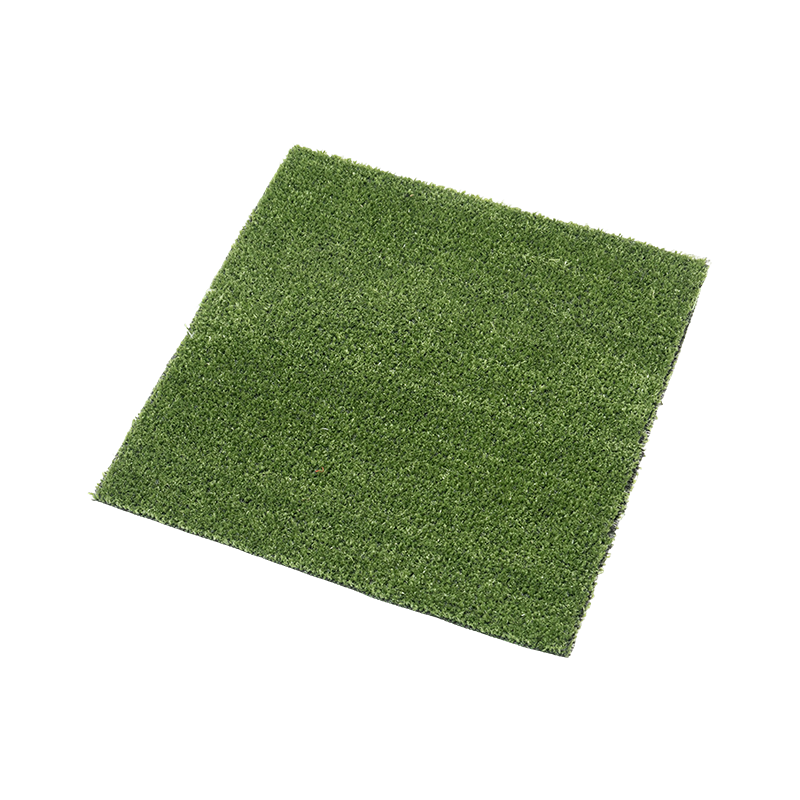 Versatile Landscape Artificial Turf for Gardens and Commercial SpacesThis synthetic grass mimics natural turf with durable fibers and drainage, ideal for low-maintenance landscaping in residential and commercial settings.View Product →
Step-by-Step Installation with Self-Adhesive Tape
Self-adhesive tape is the easiest way to complete a small DIY installation. Follow these steps for a flat, invisible seam.
- Trim and square both edges. Use a sharp utility knife and a straight edge to cut along the backing grid. Remove any loose blades.
- Align the pile direction. Brush both rolls with a stiff broom so the grass blades point in the same direction.
- Lay the tape under the seam. Center the tape directly below the gap. Make sure the release liner faces up.
- Peel the liner in 30–40 cm sections. Press the turf edge down onto the adhesive as you go.
- Roll the seam. Use a 20 kg hand roller to press both sides evenly. This squeezes the backing into the glue and removes air pockets.
- Brush the seam line. Work the blades gently to hide the joint. Infill is optional for landscape turf.
Work in small sections to keep the tape clean. Dust and grass clippings can weaken the adhesive bond.
Pro Method: Non-Adhesive Tape + Turf Adhesive
This method creates a mechanical and chemical bond that is far stronger than self-adhesive tape. It is the standard for sports fields and projects where the seam will face heavy traffic.
- Dry fit the rolls. Trim the edges and leave a 2 mm gap between the two rolls. Confirm the pile direction matches.
- Place the non-adhesive tape. Run it centered under the seam with the smooth side up.
- Apply turf adhesive. Use a 3 mm notched trowel to spread a uniform layer. Keep a working width of about 30 cm to avoid the adhesive drying before you close the seam.
- Lift one edge at a time. Place the first turf roll onto the adhesive, then lift the second roll and place it as well. Press down with your hands first.
- Roll the seam. Use a 25 kg roller over the full length of the seam, then reverse direction for even pressure.
- Cure the seam. Keep foot traffic off for 12–24 hours. The longer the curing time, the stronger the bond.
Check the adhesive's open time. Polyurethane adhesives may require 20 to 60 minutes of workable time, which is enough for long seams but requires a fast, steady team.
A real example of this method can be seen in the Heze commercial and residential building lawn project, where long seams were joined using non-adhesive tape and polyurethane adhesive.
Heze commercial and residential lawn project demonstrates this technique at scale.
For sports surfaces, a reinforced tape is necessary to handle the stress of players and studs. Canyoo's sports turf for football pitches is designed for this purpose.
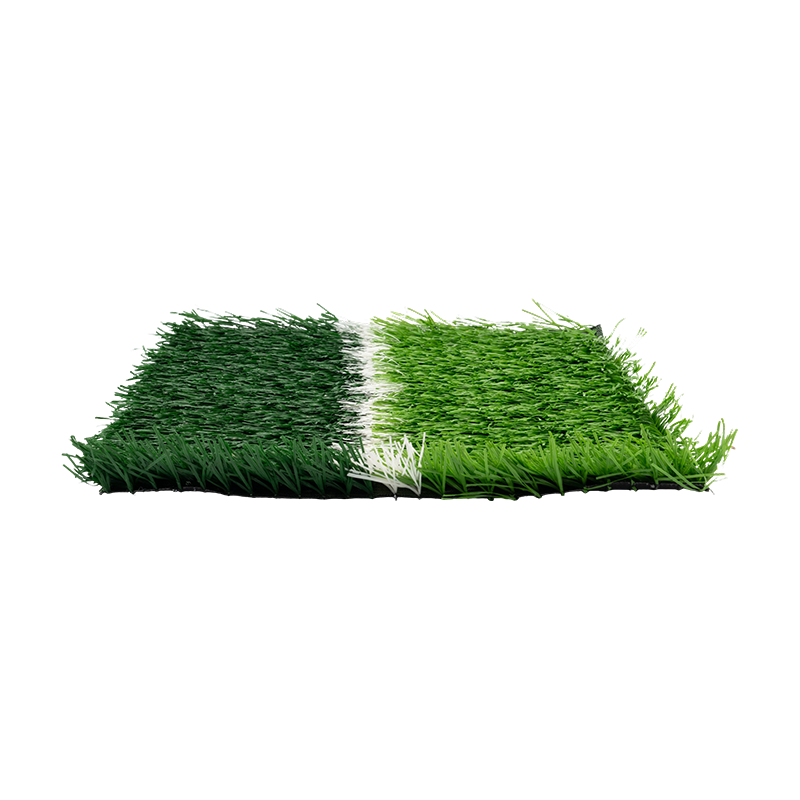 Unfilled PP Monofilament Turf for Professional Football PitchesEngineered for high-performance football fields, this turf offers a natural ball feel, excellent drainage, and durability without infill, meeting professional standards.View Product →
Common Seam Problems and How to Fix Them
Seams fail in predictable ways: lifting edges, visible lines, matting, and pooling water. Each has a clear cause.
- Lifting edges: The tape is too narrow, or the adhesive has not cured. Remove the seam and reinstall with a 30 cm tape.
- Visible seam: The pile direction changes across the seam. Brush the seam and, if needed, add infill to push blades upright.
- Matting along the seam: Caused by infill not covering the seam area evenly. Distribute the infill over the whole surface and brush.
- Water pooling: The seam sits slightly higher than the turf. Level the base and use a self-adhesive tape with a thin profile.
Where Seam Tape Works Best
Every artificial turf area needs a seam, but some applications demand stronger tape than others.
- Residential gardens and pet runs: 15–20 cm self-adhesive tape is normally sufficient.
- Rooftop terraces and commercial landscapes: Choose non-adhesive tape with polyurethane glue. UV exposure and wind call for a weatherproof bond.
- Sports pitches: Reinforced 30 cm non-adhesive tape with professional adhesive. This approach keeps the seam tight under repeated running, studding, and ball impacts.
- Playgrounds: Use a thicker, reinforced tape that can tolerate heavy foot traffic and the weight of play equipment.
Some projects include non-standard shapes, logos, or colored turf. For those cases, a custom turf solution can match the tape system to your exact layout.
Custom turf projects can be planned together with a seam strategy before installation.
On playgrounds, the seam tape must hold the surface tight while kids run and jump. Canyoo's playground turf is designed for this kind of use.
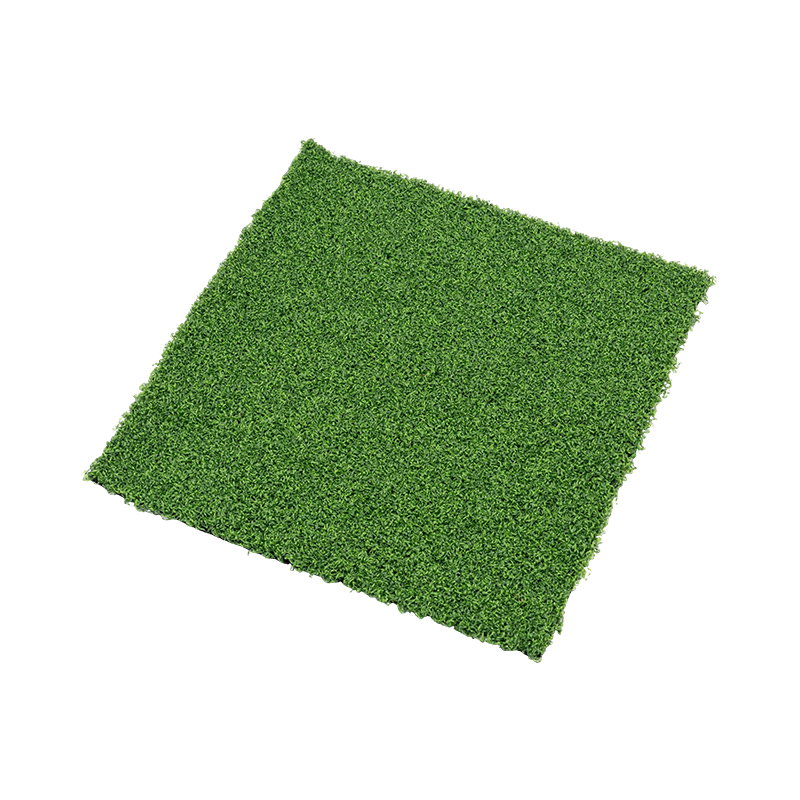 Safe Shock-Absorbing Artificial Turf for PlaygroundsDesigned for children's play areas, this turf provides cushioned impact protection, hygiene, and durability, meeting safety standards for public and school playgrounds.View Product →
When to Call a Professional
Call a professional when your seam is longer than 20 m, when the surface is sloped, or when the turf meets concrete or asphalt. These situations require precise leveling, correct adhesive dosage, and a heavy roller. A professional team will also control the pile direction to make the seam disappear.
FAQ
How long does artificial turf seam tape last?
With good preparation and a compatible adhesive, seam tape can last 10–15 years. For a longer service life, use reinforced tape and polyurethane adhesive in areas with high UV exposure.
Can I use duct tape for artificial grass?
No. Duct tape is not UV stable, and it loses adhesion quickly under foot traffic. Use seam tape or liquid turf adhesive designed for synthetic grass.
Do I need infill to hide seams?
Not always. Landscape turf can look clean without infill. Sports turf usually requires sand or rubber infill, which also helps hide the seam line.
How much seam tape do I need for a football pitch?
A standard 100 m × 64 m football pitch with 4 m rolls needs roughly 640 m of seam tape, but this changes with the roll width. Measure the length of every seam and add 10% for trimming and waste.
Can I install turf over concrete with seam tape?
Yes, but you need a shock-absorbing pad and a reinforced tape. The tape will be glued to the concrete, so use a polyurethane adhesive and let it cure fully.
Summary
Artificial turf seam tape is the hidden part of any synthetic grass installation. Choose self-adhesive tape for fast, tidy repairs and small landscapes. Choose non-adhesive tape plus liquid adhesive for sports fields, rooftops, and large public areas. Match the tape width to the turf type, keep the pile direction consistent, press the seam with a roller, and let the bond cure before heavy use. If the project exceeds a simple DIY patch, call in a professional installation team to make the seam invisible and long-lasting.


 +86-19742095266
  zoe_canyoograss@163.com
  No.18 Baqiao, Xinji Yizheng, Yangzhou, Jiangsu. P.R. China