 Get in touch
 English
  English
 中文简体
中文简体 русский
 Español
 عربى
عربى Français
 Português
 Deutsch
 বাংলা
বাংলা 日本語
日本語 Polskie
 italiano
 Türk
Türk 한국어
한국어 ไทย
ไทย
Artificial turf for playgrounds is a synthetic grass system engineered to cushion falls, drain quickly, and survive years of heavy play. When the turf pile, infill, and shock pad are selected as one certified system, it is one of the safest and most practical surfaces a school, park, or backyard can install.
This guide explains what playground-grade turf is, how safe it actually is, how it compares with wood mulch and rubber surfaces, what a realistic budget looks like, and what installation and maintenance demand.
Content
- 1 What Is Artificial Turf for Playgrounds?
- 2 Is Artificial Turf Safe for Playgrounds?
- 3 How Does Artificial Turf Compare with Other Playground Surfaces?
- 4 How Much Does Artificial Turf for Playgrounds Cost?
- 5 Installation and Drainage Considerations
- 6 How Much Maintenance Does Playground Turf Need?
- 7 How to Choose the Right Artificial Turf for a Playground
- 8 Artificial Turf for Playgrounds: FAQs
What Is Artificial Turf for Playgrounds?
In simple terms, it is a multi-layer surface system that mimics grass but is built to take heavy play. Get the components right, and the whole installation works as an impact-absorbing crash mat with the look of a lawn.
- Turf pile — polyethylene or nylon blades, usually 25 to 40 mm for play areas, tufted densely so the surface stays upright under constant foot traffic.
- Drainage backing — a permeable polyurethane or latex-coated layer that lets rainwater pass through instead of pooling.
- Infill — silica sand, TPE granules, or organic materials brushed between the blades to weigh the turf down and absorb impact.
- Shock pad — an optional but recommended foam layer beneath the turf that significantly raises the certified fall height.
When you see a fall-height rating on a turf product, that rating belongs to the complete installed system — pile, infill, pad, and base — not to the carpet roll alone.
Is Artificial Turf Safe for Playgrounds?
Yes, provided the installed system meets an accepted impact standard such as ASTM F1292 or EN 1177 and is inspected after installation. The grass blades themselves provide almost no cushioning; the infill and shock pad do the work.
Fall Height and Impact Attenuation
A standard playground turf system with a total composite thickness of about 50 to 80 mm, including infill and pad, commonly achieves a critical fall height of 1.5 to 3.0 m. Before signing a contract, ask for the test report for the exact system you intend to install, and request a field test once the surface is laid. Equipment decks above 1.2 m require verified fall-height performance, not a general brochure rating.
Surface Temperature and Hygiene
Dark synthetic fibers absorb heat, so midday surface temperatures can be noticeably higher than natural grass. Mitigation is straightforward: choose medium-green yarn, use a heat-reducing infill, install shade structures, or hose the surface down before peak play. For hygiene, specify infill that is lead-free and phthalate-free, and rinse spills quickly to keep the surface clean and odor-free.
How Does Artificial Turf Compare with Other Playground Surfaces?
Compared over its full life cycle, artificial turf is the only common surface that combines all-weather access, wheelchair-friendly movement, and low seasonal upkeep in one installation.
| Surface | Upfront Cost (Installed) | Typical Critical Fall Height | Maintenance | Typical Lifespan |
|---|---|---|---|---|
| Artificial turf with shock pad | $8–$20 per sq ft | 1.5–3.0 m (5–10 ft) | Low | 10–15 years |
| Engineered wood mulch | $3–$6 per sq ft | 1.5–3.0 m depending on depth | High — rake and top up regularly | 1–3 years before replenishing |
| Rubber tiles | $10–$18 per sq ft | 1.5–3.0 m depending on tile | Low | 8–12 years |
| Poured-in-place rubber | $12–$25 per sq ft | 1.5–3.6 m (5–12 ft) | Low | 8–12 years |
Accessibility is where the choice becomes clear. Loose-fill surfaces such as wood mulch struggle to pass ASTM F1951 wheelchair maneuverability tests unless they are stabilized or fitted with mats, whereas turf and rubber surfaces pass easily. That is why public park and school specifications increasingly steer toward synthetic surfaces.
How Much Does Artificial Turf for Playgrounds Cost?
Plan for $8 to $20 per square foot fully installed for a certified playground-grade system; the final number depends mainly on site preparation, shock pad, infill type, and turf density. The higher initial investment often pays back within five to seven years through eliminated mowing, watering, and resurfacing cycles.
- Site preparation — excavation, grading, and a 75–100 mm compacted stone base can account for a third of the total quote.
- Shock pad — adds roughly $1.5–$3 per sq ft but raises the fall height rating by up to 1 m and extends turf life.
- Infill choice — sand-only is the cheapest; TPE or organic infill costs more but stays softer and cooler.
- Turf density — denser, UV-stabilized yarn costs more per roll and survives playground abuse much longer.
Ask for itemized quotes that include delivery, seams, edging, installation, and post-installation impact testing. A cheap quote with no testing and no warranty is the most expensive option in the long run.
Installation and Drainage Considerations
A safe playground surface is decided underground, not on the carpet. Correct base preparation and drainage prevent the turf from shifting, pooling water, or developing trip hazards within the first year.
- Base — 75–100 mm of compacted crushed aggregate, leveled with a slight fall so water runs toward the perimeter.
- Drainage — a permeable backing combined with the prepared base lets rainfall pass through at rates above 1,000 mm per hour, so puddles rarely form even after heavy storms.
- Edging — nailed timber, aluminum, or rubber curbs keep infill and turf edges firmly in place.
- Seams — glued and sealed with joint tape; a poor seam is the most common trip hazard in early turf failures. Ask the installer for seam samples and a joint guarantee.
The same discipline applies at every scale. In our kindergarten playground installations, we prepare the base and check fall-height performance just as carefully for a compact urban yard as for a large school field.
How Much Maintenance Does Playground Turf Need?
About 30 minutes a month of light upkeep keeps a playground surface clean, safe, and evenly cushioned; the work is seasonal rather than weekly.
- Rinse with a hose to remove dust, spills, and bird droppings.
- Brush the pile every two to three months to keep blades upright and redistribute infill.
- Clear leaves with a blower or a rake with plastic tines; never use a metal rake.
- Top up infill every two or three years in high-traffic zones under swings and slide exits.
- Inspect seams and edging once a year, especially after winter freezes.
How to Choose the Right Artificial Turf for a Playground
Choose the system that pairs certified impact performance with durable, non-toxic materials, and verify the warranty covers playground-level wear rather than decorative garden use. Work through these five points before ordering artificial turf designed specifically for playgrounds.
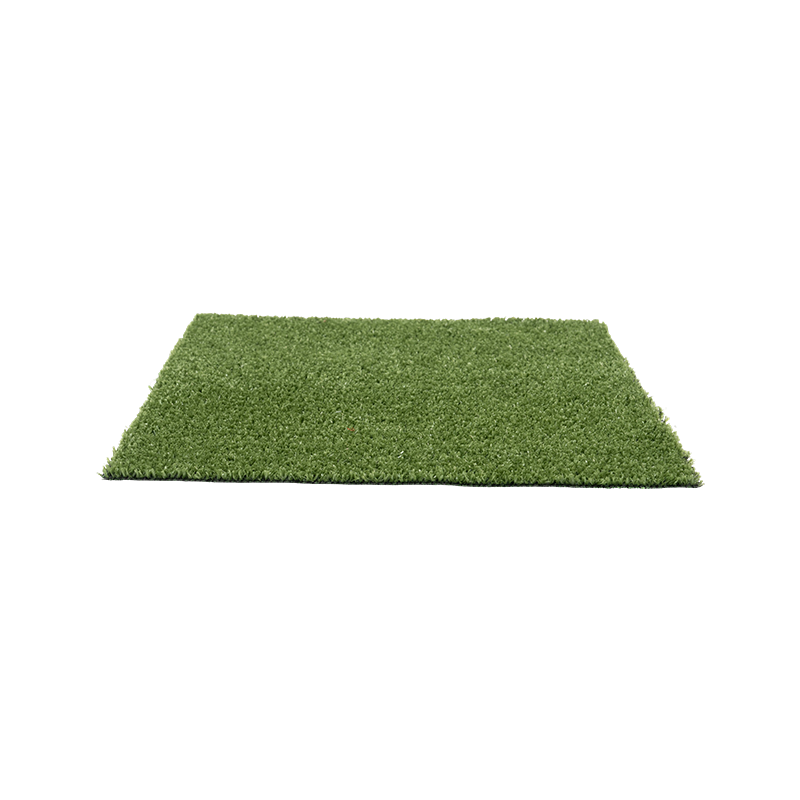
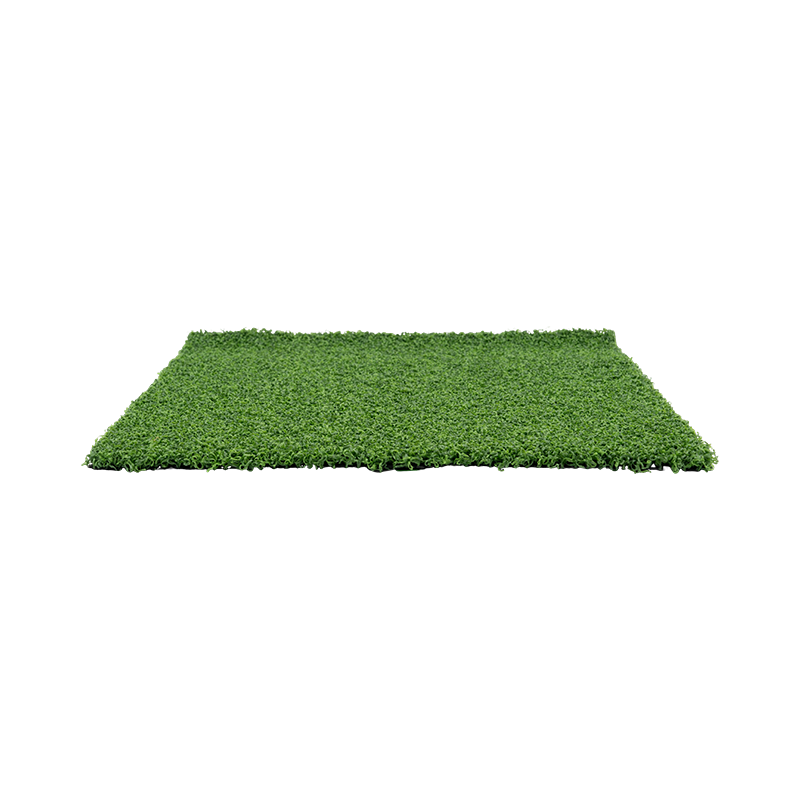
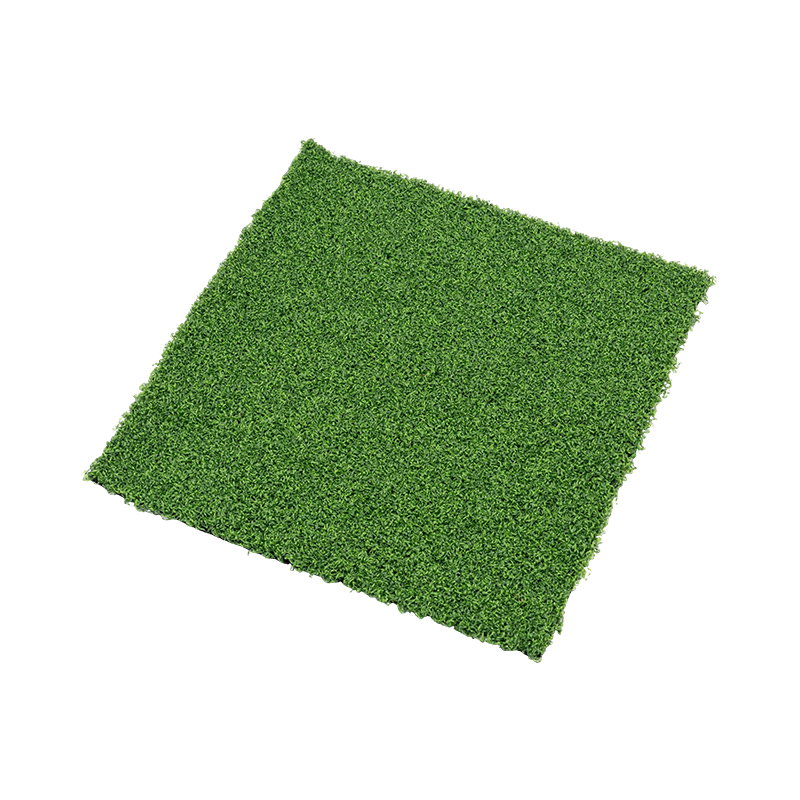 Artificial Turf for Playgrounds Manufacturer, FactoryArtificial turf for playgrounds and play areas, providing durable, easy-to-maintain surfaces for children. Canyoo is a China artificial p...View Product →
- Impact certification — require EN 1177 or ASTM F1292 test reports for the complete system at your equipment height.
- Pile height — 25–40 mm is the practical range; shorter feels hard, and taller blades mat down under heavy play.
- Infill type — TPE granules stay soft and dust-free; organic infill is eco-friendly but compacts faster; avoid unbranded crumb rubber where dust control matters.
- Drainage backing — multi-layer drainage structures resist mold and keep the surface usable shortly after rain.
- UV stabilization — quality yarn should carry at least an eight-year UV warranty; otherwise color fade appears quickly in sunny climates.
For play zones with logos, roads, or awkward curves, ask about custom turf projects that can be cut and seamed around your layout rather than forcing a standard rectangle.
Artificial Turf for Playgrounds: FAQs
Does artificial turf get too hot for children?
In direct sunlight the surface temperature rises above natural grass. Lighter yarn, cooling infill, shade structures, and an occasional water rinse reduce the effect, and many parks schedule peak play around midday heat as a simple precaution.
How long does playground artificial turf last?
Ten to fifteen years is a realistic lifespan for a well-installed, playground-grade system with UV-stabilized yarn. Shock pads typically match that range, while infill may need topping up in high-traffic zones.
Can you install turf directly over concrete or asphalt?
Yes, but only with a shock pad that has documented fall-height performance on the specific base, and the concrete must be smooth, clean, and sloped for drainage. Turf glued directly onto hard ground offers almost no impact protection.
Is the infill safe if a child swallows it?
Specify infill that is lead-free and phthalate-free. TPE granules are larger, softer, and less dispersible than crumb rubber, which is why they are a common choice for toddler areas. No playground surface is meant to be eaten, so adult supervision and hand-washing habits still matter.

 +86-19742095266
  zoe_canyoograss@163.com
  No.18 Baqiao, Xinji Yizheng, Yangzhou, Jiangsu. P.R. China