 Get in touch
 English
  English
 中文简体
中文简体 русский
 Español
 عربى
عربى Français
 Português
 Deutsch
 বাংলা
বাংলা 日本語
日本語 Polskie
 italiano
 Türk
Türk 한국어
한국어 ไทย
ไทย
An artificial grass manufacturer is a company that designs, produces, and often installs synthetic turf for sports pitches, residential gardens, and commercial landscapes. The manufacturer you choose controls yarn quality, tuft density, backing strength, and installation support, which means the decision directly determines how safe, durable, and natural-looking your surface will be.
Content
- 1 What Does an Artificial Grass Manufacturer Actually Do?
- 2 Sports Turf vs. Landscape Turf: Two Different Product Lines
- 3 How to Evaluate an Artificial Grass Manufacturer
- 4 Certifications and Standards That Matter
- 5 The Manufacturing Process: What Happens Inside a Factory
- 6 Common Applications and What They Demand From the Manufacturer
- 7 Questions to Ask Before You Place an Order
- 8 Frequently Asked Questions
What Does an Artificial Grass Manufacturer Actually Do?
A genuine artificial grass manufacturer owns and operates the full production chain: yarn extrusion, tufting, backing lamination, coating, and final inspection.
During extrusion, polyethylene or polypropylene pellets are melted and shaped into individual blades with a specific thickness, shape, and color. Tufting then sews those blades into a primary backing at a controlled density. A secondary backing of latex or polyurethane locks the fibers in place and provides dimensional stability, which is why backing weight and coating adhesion matter more than the color of the yarn.
Some suppliers stop at raw rolls and leave everything else to you. A full-service manufacturer goes further with project design, site surveys, installation drawings, and maintenance programs. That end-to-end approach gives you one accountable partner from the first sketch to the final walkthrough, which is especially valuable on large multi-field or multi-building projects.
Sports Turf vs. Landscape Turf: Two Different Product Lines
Not all artificial grass is engineered the same way. Sports and landscape turfs are built for different priorities, and choosing the wrong product line is the most common procurement mistake we see in the industry.
| Aspect | Sports Turf | Landscape Turf |
|---|---|---|
| Primary purpose | Athletic performance and safety | Natural appearance and comfort |
| Pile height | Typically 40–60 mm | Typically 20–40 mm |
| Infill | Required | Usually not required |
| Backing | Reinforced for impact loads | Standard stability |
| Testing focus | Ball roll, shock absorption, friction | UV resistance, softness, drainage |
Sports turf is designed for ball response and athlete safety, so it uses denser tufting, taller piles, and infill systems such as silica sand and thermoplastic elastomers. Landscape turf prioritizes a realistic green look, soft texture, and fast drainage for daily use in gardens, rooftops, entrances, and play spaces.
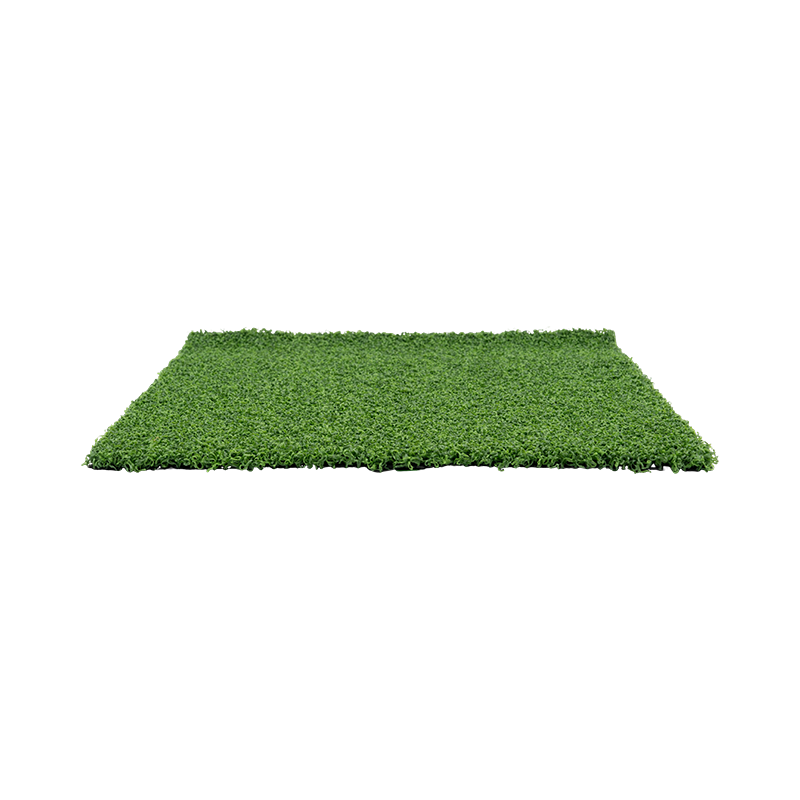
Sports Artificial Turf
Performance-tested systems for football, rugby, hockey, tennis, basketball, and multi-sport venues.
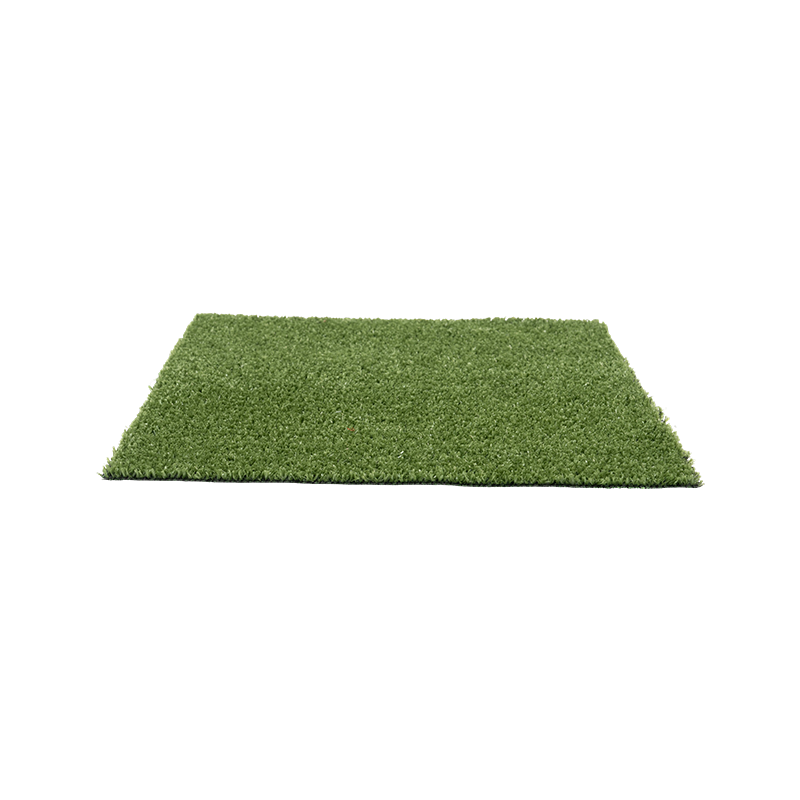
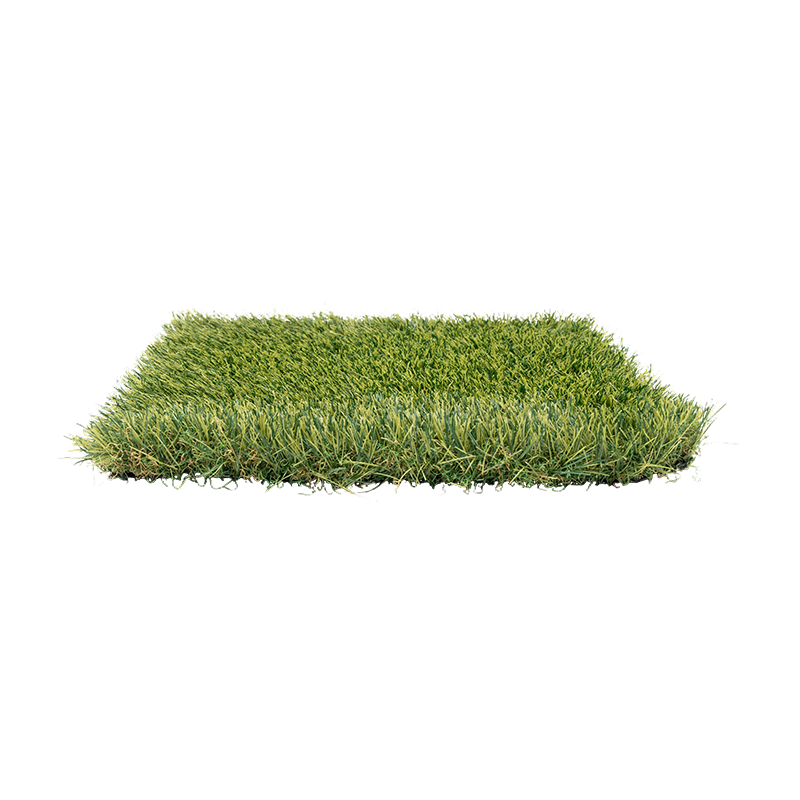
Landscape Artificial Turf
Realistic, low-maintenance grass for gardens, rooftops, hotels, pet areas, and playgrounds.
How to Evaluate an Artificial Grass Manufacturer
The most reliable way to compare manufacturers is to ask for evidence in five areas: production capability, certifications, product range, customization ability, and service coverage.
| Evaluation area | What to verify |
|---|---|
| Manufacturing capability | Does the company own the factory? How many production lines and what is the monthly output? |
| Certifications | ISO 9001, ISO 14001, and independent test reports for yarn and backing. |
| Product range | Both sports and landscape lines with documented technical specifications. |
| Customization | Custom colors, pile heights, shapes, and printed logos. |
| Service coverage | Design support, installation guidance, warranty, and after-sale maintenance. |
Yangzhou Canyoo Grass Carpet Co., Ltd., a China-based manufacturer, is a practical example of the full-cycle model. The company covers design, production, installation, and maintenance for both sports and landscape turf, and it maintains ISO 9001 and ISO 14001 certified management systems. For unusual site conditions, Canyoo also runs a custom turf program that accepts non-standard dimensions and layouts instead of forcing clients into catalog products.
The key distinction is that a manufacturer can change the recipe — adjusting pile height, stitch rate, and yarn denier — while a trading company can only change the price tag. If a supplier cannot name its own production lines or explain its manufacturing parameters, treat that as a red flag.
Certifications and Standards That Matter
ISO 9001 and ISO 14001 are the two certifications most worth checking, because they cover quality management and environmental management at the organizational level.
ISO 9001 requires documented procedures, traceability, and continuous improvement across production. ISO 14001 requires an environmental management system that controls waste, emissions, and raw material usage. Neither certificate guarantees a perfect product, but both prove that the manufacturer follows audited, repeatable processes rather than ad-hoc production.
On the product side, request test reports covering UV stability, tensile strength, tuft bind, and drainage rate. For sports surfaces, ask for results from standard performance tests like ball rebound, shock absorption, and vertical deformation. A manufacturer that cannot produce these documents on demand should not be shortlisted for a large project.
The Manufacturing Process: What Happens Inside a Factory
Understanding the production process helps you recognize quality early. Premium artificial grass is not the result of a single machine; it comes from disciplined control at every stage.
- Yarn extrusion: Polyethylene or polypropylene pellets are melted and formed into fibers. The shape and thickness of the fiber influence softness, durability, and UV resistance.
- Tufting: Fibers are sewn into a primary backing at a precise density. Higher tuft density usually means better durability and a fuller appearance.
- Backing lamination: A secondary backing locks in the tufts. Heavier, well-bonded backing prevents fiber pull-out and wrinkling.
- Coating and curing: Coatings provide dimensional stability and, in many products, engineered drainage openings.
- Inspection and cutting: Rolls are checked for density consistency, then cut and packed to order specifications.
The layers you cannot see from the top — backing weight, coating adhesion, and tuft bind strength — determine whether the surface stays flat, stays green, and stays safe after years of use.
Common Applications and What They Demand From the Manufacturer
Every application loads the surface differently, and a competent manufacturer recommends the right product rather than overselling a single option.
- Football pitches: Tall pile, infill systems, and high shock absorption.
- Tennis and basketball courts: Consistent ball bounce, low pile, and controlled surface friction.
- Rooftops and balconies: Lightweight construction and excellent drainage.
- Hotels, restaurants, and event venues: Aesthetics and color consistency.
- Schools and playgrounds: Softness, non-toxic materials, and safety testing.
- Pet areas: Fast drainage and easy cleaning.
Questions to Ask Before You Place an Order
Every reliable manufacturer should answer these six questions clearly, without delaying for a follow-up meeting.
- Do you own the factory, or are you a trading company?
- Can you share test reports for UV stability, tensile strength, and tuft bind?
- What are your minimum order quantities and typical lead times?
- Can you produce custom colors, mixed pile heights, or shaped edge details?
- What does the warranty cover: yarn, backing, UV, or installation work?
- Do you provide installation drawings and on-site guidance, or strictly material supply?
Frequently Asked Questions
Is artificial grass safe for children and pets?
Yes, when the product uses non-toxic, lead-free materials. Look for manufacturers that provide safety test reports and, for play areas, recommend infill approved for child use.
How long does artificial grass last?
A well-made landscape turf typically lasts 10 to 15 years, while sports turf lasts 5 to 10 years depending on intensity of use, infill maintenance, and local UV conditions.
Does artificial grass require maintenance?
Minimal, but not zero. Remove debris regularly, rinse with water occasionally, and brush high-traffic areas to keep fibers upright. Sports fields also need periodic infill top-up.
Can a manufacturer produce a custom design for my project?
Most full-cycle manufacturers can produce custom colors, logos, and multi-zone layouts. Confirm minimum order quantities, sampling timelines, and lead times before signing a contract.
Is artificial grass environmentally friendly?
Modern artificial grass saves thousands of liters of water per year and eliminates mowing emissions. Many manufacturers now produce recyclable yarn and use water-based coatings, so ask about the specific sustainability measures behind the product.
Choosing an artificial grass manufacturer comes down to transparency. A supplier that can show you its factory, its test reports, and its completed projects is far more likely to deliver on the promise, especially as industry trends push toward sustainable materials and safer infill systems. Verify before you sign, and the surface will perform for years after the rolls are unpacked.

 +86-19742095266
  zoe_canyoograss@163.com
  No.18 Baqiao, Xinji Yizheng, Yangzhou, Jiangsu. P.R. China