 Get in touch
 English
  English
 中文简体
中文简体 русский
 Español
 عربى
عربى Français
 Português
 Deutsch
 বাংলা
বাংলা 日本語
日本語 Polskie
 italiano
 Türk
Türk 한국어
한국어 ไทย
ไทย
Artificial turf infill is the granular material placed between synthetic grass fibers after installation. It acts as ballast, holds fibers upright, cushions impact, and affects drainage, heat, and durability.
If you are selecting an artificial turf system, the infill should be decided at the same time as the pile height and backing, not as an afterthought. The wrong infill can make a lawn feel hard, a playground too stiff, or a football pitch slippery.
Content
- 1 Why Infill Matters in Artificial Turf
- 2 Common Types of Artificial Turf Infill
- 3 How to Choose Infill by Application
- 4 Comparing Infill Performance and Cost
- 5 Installation and Maintenance for Infill
- 6 What Real Installations Show
- 7 The Right Infill Is a System Decision
- 8 Frequently Asked Questions About Artificial Turf Infill
Why Infill Matters in Artificial Turf
Without infill, most synthetic turf systems fail within the first year of heavy use.
Infill performs several jobs at once:
- Ballast: it provides the weight that keeps turf from wrinkling, lifting, or billowing in wind.
- Fiber support: it pushes the grass blades upright and helps them recover after foot traffic.
- Impact absorption: it softens falls, tackles, and everyday play.
- Drainage: it creates a network of spaces that lets water pass through and reduces puddles.
On a 500 m² football pitch, a sand-and-rubber infill system can weigh more than 15 tons. That weight is not a side effect; it is what makes the surface feel stable under play.
Common Types of Artificial Turf Infill
There is no universal best infill; the best choice matches the surface, climate, and load.
| Infill Type | Key Properties | Typical Applications |
|---|---|---|
| Silica sand | Dense, rounded, low cost, good drainage; can compact and harden on hard soil | Landscape lawns, putting greens, sports base layer |
| Zeolite | Porous, absorbs ammonia and moisture, reduces odor, slightly improves drainage | Pet areas, residential lawns |
| Crumb rubber | Elastic, durable, good shock absorption; can retain heat and develop a rubbery smell | Football pitches, playgrounds, high-traffic sports |
| TPE or EPDM | Thermoplastic rubber, cleaner, softer, more expensive, better temperature stability | Premium sports fields, children's play areas |
| Organic infill | Made from cork, coconut, or wood; renewable, soft, low odor; decomposes faster and needs top-ups | Residential landscape, pet areas with moderate use |
For sports, a two-layer system is common. Silica sand forms the base, and a rubber or TPE top layer provides resilience. For landscape projects, a single layer of sand is usually enough.
How to Choose Infill by Application
Choose infill after confirming the pile height, backing type, drainage plan, and expected use frequency.
Sports Fields and Training Grounds
Sports fields need a dense, elastic infill system that will not shift under sharp turns. Football turf typically uses a 40 to 60 mm pile with a combination of sand and rubber, while tennis and basketball courts use shorter piles and a lighter sand infill. The backing and fiber density must be designed to hold whatever infill you select; this is why sports artificial turf systems are specified as complete pitches rather than loose turf rolls.
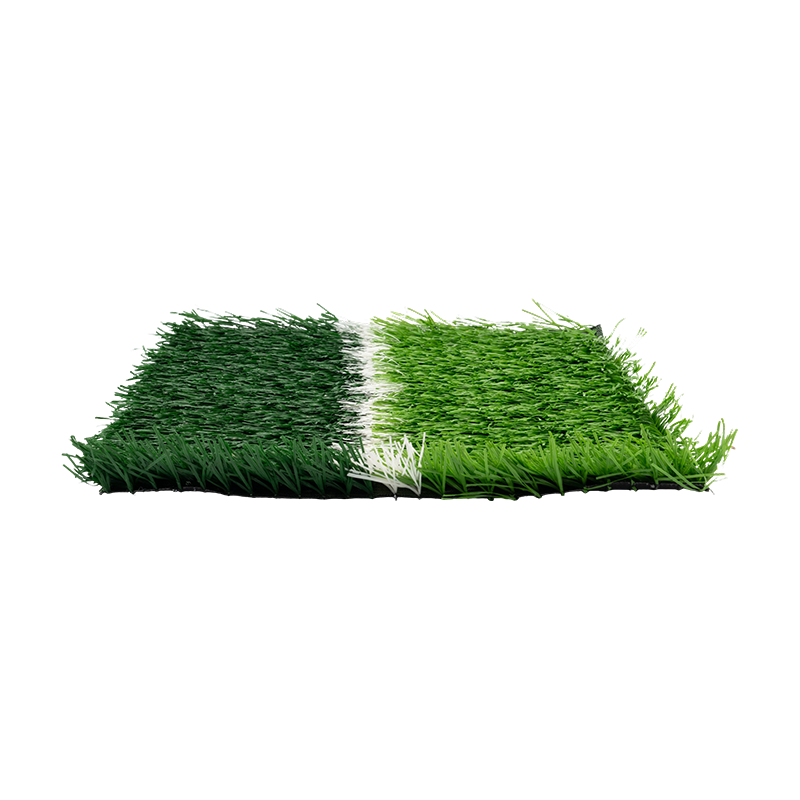 Artificial Turf for Football Pitches Manufacturer, FactoryArtificial turf for football pitches with durable fibers and consistent performance. Canyoo is a China football artificial turf manufactu...View Product →
Landscape Lawns and Residential Gardens
Landscape lawns need only a light infill layer to add weight and support. Standard residential turf with a 30 to 40 mm pile can use 1 to 3 kg of sand per square meter. Applying more than needed makes the blades lie down and reduces comfort. If you want a specific look, such as a putting green or decorative border, the infill can be changed in layer thickness but not in core material without adjusting the turf itself.
Pet Areas and Playgrounds
Pet areas need infill that is dust-free, non-abrasive, and odor-controlling. Zeolite helps trap ammonia, and rounded silica sand is gentle on paws. For playgrounds, impact safety matters more than appearance; TPE or EPDM infill provides better fall cushioning than sand alone. In both cases, the turf must tolerate frequent cleaning. A dedicated pet-friendly artificial turf product is a better base for the infill than a standard lawn turf.
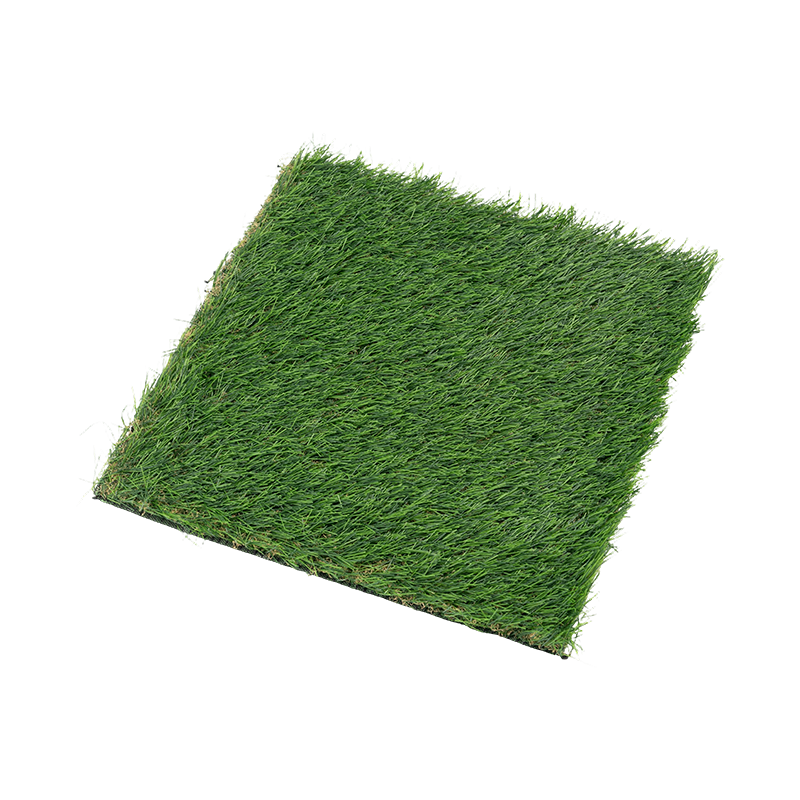 Artificial Turf for Pets & Dogs Manufacturer, FactoryArtificial turf for pets and dogs, designed for comfort and easy maintenance. Canyoo is a China artificial pet turf manufacturer and fact...View Product →
Rooftop and Balcony Projects
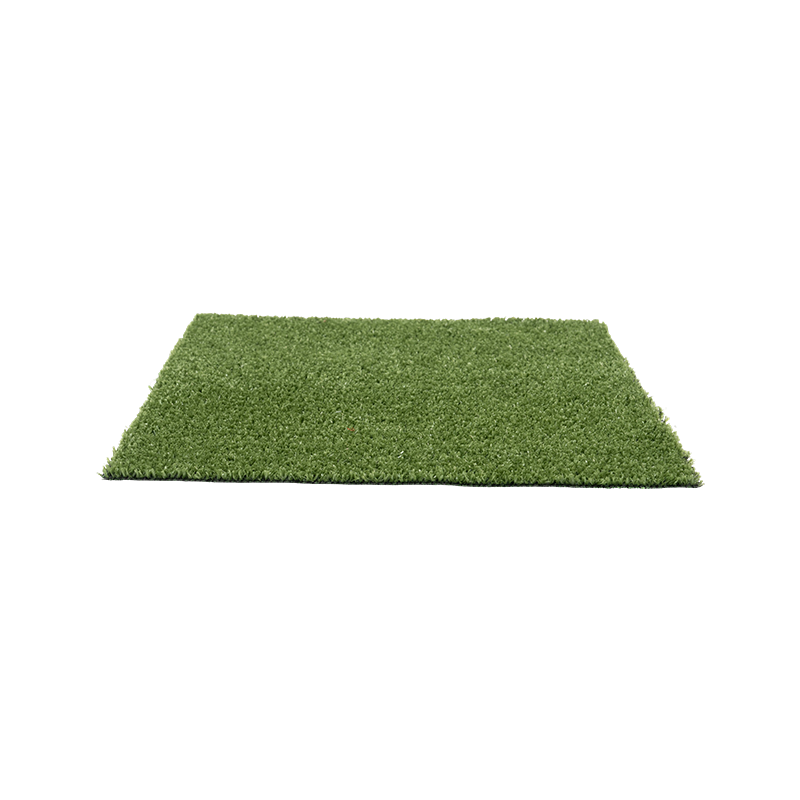
Rooftop and balcony installations need lightweight infill that does not trap water. A thin layer of fine silica sand is enough to stabilize the turf without loading the structure. Heavy rubber infill should be avoided unless the building slab has been designed for it. Our rooftop artificial turf range pairs well with a 1 to 2 kg/m² lightweight infill specification.
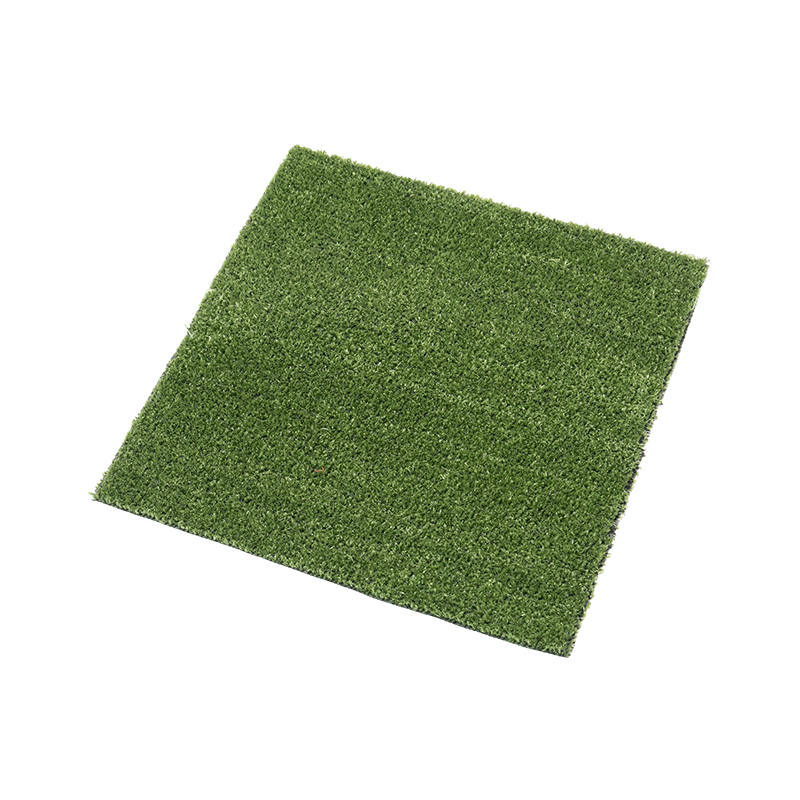 Artificial Turf for Rooftops & Roof Terraces Manufacturer, FactoryArtificial turf for rooftops and roof terraces creates low-maintenance green spaces. Canyoo is a China artificial rooftop turf manufactur...View Product →
Custom Projects
Non-standard layouts require a full-system approach. When a shape, slope, or usage pattern does not match a standard design, the infill type and depth should be designed with the turf backing and drainage together. A custom solution prevents drainage failures and premature flattening. This is where our custom turf projects philosophy starts.
Comparing Infill Performance and Cost
No single infill wins on every performance; the tradeoffs are heat, shock absorption, durability, odor, maintenance, and cost.
| Criterion | Silica Sand | Crumb Rubber | TPE | Organic |
|---|---|---|---|---|
| Heat retention | Moderate | High | Moderate | Low |
| Shock absorption | Low | High | High | Moderate |
| Durability | High | Moderate | High | Low |
| Odor control | Neutral | Can smell | Low smell | Good |
| Maintenance | Low | Moderate | Low | High |
| Relative cost | Low | Moderate | High | Moderate |
Use this table as a starting point. Installers should test infill samples and inspect a small installed patch before committing to a large area.
Installation and Maintenance for Infill
Infill installation is a layered process: spread, brush, repeat. Dumping all infill at once causes uneven coverage and poor performance.
The basic sequence is simple:
- Confirm the pile height and infill depth from the turf specification.
- Spread the first layer of infill, usually silica sand.
- Power brush the turf to carry the sand down to the backing.
- Spread the second layer, if needed, such as rubber or TPE.
- Brush and groom the surface again, then inspect for even coverage.
After that, maintenance is mostly monitoring. The following guidelines prevent common failures:
- Check infill depth every six months.
- Top up with the same material, never a different one.
- Use a power brush to redistribute infill that has migrated to the edges.
- Clean pet waste promptly and rinse the area to reduce odor.
What Real Installations Show
The most reliable way to judge infill choices is to look at completed projects. In practice, the biggest failure is not choosing the wrong brand of infill, but choosing the wrong depth for the pile height. When the infill layer is too shallow, the turf flattens and feels spongy; when it is too deep, the fibers lose their ability to spring back.
For example, a football field with a 50 mm pile and 35 mm infill depth can drain quickly and stay comfortable, but the same depth on a decorative lawn with a 25 mm pile will ruin the surface. Our sports and landscaping installations show how infill specifications are matched to each site.
The Right Infill Is a System Decision
Start with the use case, not the price. Match the infill to the pile height, drainage, climate, traffic, and safety requirements of the project. Infill can be added or topped up later, but fixing a poorly selected infill means pulling up the turf or brushing out the entire layer, which is expensive and time-consuming.
If you are planning a new lawn, pet area, playground, or sports field, ask your supplier to provide one complete specification for the turf, infill, and installation. This reduces procurement risk and ensures that the finished surface performs as expected.
Frequently Asked Questions About Artificial Turf Infill
The simplest way to plan infill is to answer a few practical questions.
How much infill do I need?
It depends on pile height and use. Landscape lawns generally need 1 to 3 kg per square meter of silica sand. Sports turf needs 20 to 40 kg per square meter, often split between sand and a rubber or TPE top layer.
Can I add infill later?
Yes, but only if the blade length has enough room. If the pile is already full, adding more infill will flatten the turf instead of improving it.
Which infill is best for pets?
Look for zeolite or coated sand with no sharp edges. Ensure the turf itself can be rinsed and dried. The best pet system combines a pet-specific turf with a dust-free, odor-controlling infill.
Does infill affect surface temperature?
Yes. Dark crumb rubber absorbs more heat, while lighter sand and organic materials feel cooler. All artificial turf will be warmer than natural grass in direct sunlight, so shading and irrigation are more effective than changing infill alone.
Is organic infill durable enough?
Organic infill is comfortable and low in odor, but it decomposes more quickly than sand or rubber. It is suitable for light residential use, but not for heavy sports traffic or long-term commercial projects.


 +86-19742095266
  zoe_canyoograss@163.com
  No.18 Baqiao, Xinji Yizheng, Yangzhou, Jiangsu. P.R. China