 Get in touch
 English
 English
 中文简体
 русский
 Español
 عربى
 Français
 Português
 Deutsch
 বাংলা
 日本語
 Polskie
 italiano
 Türk
 한국어
 ไทย

A synthetic grass play surface is only as good as the layer nobody photographs. The visible turf gets the attention, but the fall-height rating comes from the shock pad underneath and the infill brushed into it. Specify those three parts as one tested system and the area will pass inspection and survive a decade of daily use; buy them separately from three suppliers and a surface that looks soft can still fail an impact test.
The order of decisions is short and worth following: required fall height first, turf specification second, base and drainage third, and a heat plan before the first summer rather than after it.
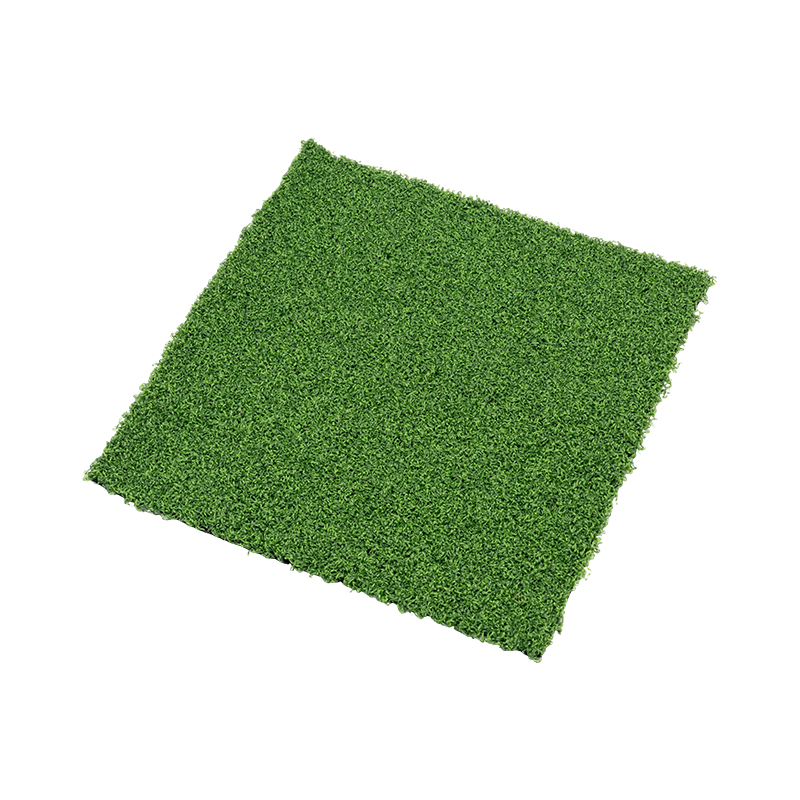 Artificial Turf For PlaygroundsArtificial turf for playgrounds is a type of artificial ground system specifically designed for children's play areas. Its core function is to provide safe shock absor...View Product →
Content
- 1 What an Artificial Turf Play Area Actually Consists Of
- 2 Fall Height Comes Before Everything Else
- 3 Turf Specifications That Matter on a Play Surface
- 4 Infill Choice Drives Heat, Feel and Cleaning
- 5 Layout, Colour and Edges
- 6 Base, Levels and Drainage
- 7 Installation Sequence
- 8 Budget Drivers and Procurement Checks
- 9 Keeping the Surface Safe After Handover
- 10 Frequently Asked Questions
- 10.1 How much fall height can artificial turf handle on its own?
- 10.2 Is artificial turf hotter than natural grass?
- 10.3 Is synthetic grass better than natural grass for a play area?
- 10.4 Can synthetic turf be installed over concrete?
- 10.5 How long does a play-area surface last?
- 10.6 What does installation cost depend on?
What an Artificial Turf Play Area Actually Consists Of
A play area is a built system, not a carpet laid on dirt. Four layers decide how it performs, and each one answers a different question.
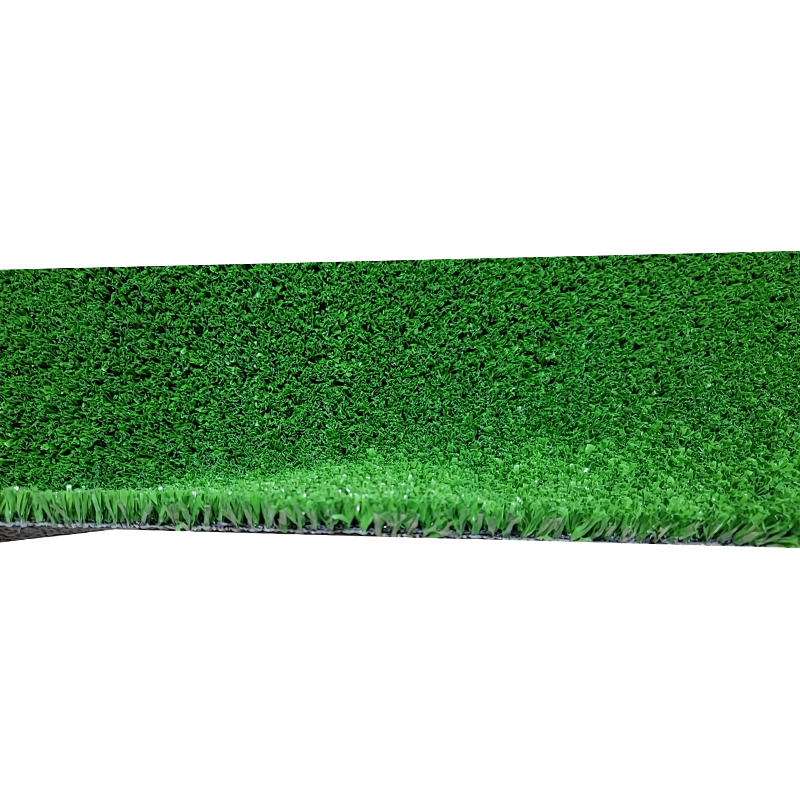
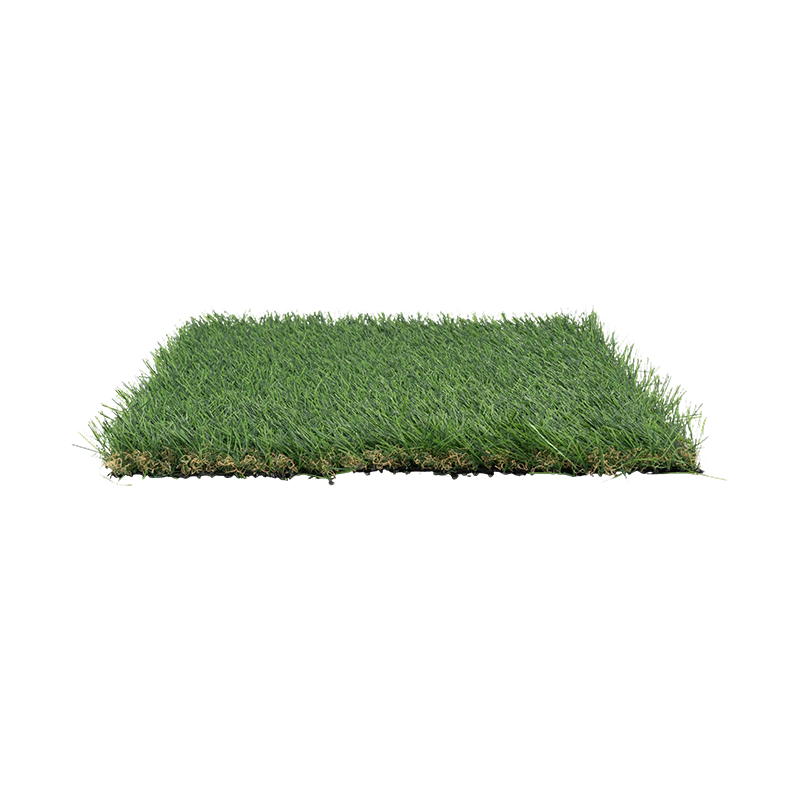
- Turf surface. The visible pile, usually 20–35 mm of UV-stabilised polyethylene or polypropylene fibre tufted into a woven or non-woven backing. It provides traction, appearance and abrasion resistance.
- Infill. Loose silica sand, rubber, TPE or organic granules brushed between the fibres. It weights the turf, cushions footfalls, keeps fibres upright and, in some systems, contributes to impact absorption.
- Shock-absorbing layer. A foam, rubber or engineered pad that delivers the critical fall height rating. This is the component most often downgraded when budgets tighten.
- Base and drainage. Compacted aggregate over a geotextile separator, graded so water leaves the surface instead of sitting on it.
The same build-up works for kindergartens, school yards, hotel courtyards, rooftop terraces and residential gardens. What changes between them is the fall height requirement, the traffic load and how visible the finish needs to be.
Fall Height Comes Before Everything Else
Order the shock pad before you order the turf, because the fall-height rating drives the whole build-up. A play structure with a 1.5 m platform needs a surfacing system tested to 1.5 m or higher — not a product described loosely as "soft" or "safety turf".
| Parameter | Usual target | What it means in practice |
|---|---|---|
| Critical fall height | Equal to or greater than the equipment's maximum fall height | A 2.0 m deck requires a certified 2.0 m system; over-specifying is fine, under-specifying is not |
| HIC | ≤ 1000 | Head injury criterion measured by dropping a instrumented headform |
| G-max | ≤ 200 g | Peak deceleration; thinner pads push this figure upward quickly |
| Shock pad thickness | 10–25 mm, depending on fall height | Thicker pads lower g-max but raise cost and change edge detailing |
| Test conditions | Wet and dry, at stated temperature | Some systems lose performance when hot or saturated, so ask for both data sets |
Two practical checks prevent most failures. First, ask for the test report for the exact combination of pad, turf and infill you are buying — a pad certificate alone proves nothing once 25 mm of infill sits on top. Second, keep the installation within the tested assembly: swapping to a cheaper, denser infill can quietly invalidate the rating.
Turf Specifications That Matter on a Play Surface
For play, a shorter, denser pile beats a long, soft-looking one. Long fibres flatten under foot traffic, trap sand unevenly and are harder to clean; 25–30 mm with a solid face weight reads better after five years than 40 mm of decorative grass.
| Property | Play-area range | Comment |
|---|---|---|
| Pile height | 20–35 mm | Shorter pile is easier to brush, clean and inspect |
| Face weight | 1,100–2,000 g/m² | The main durability indicator for public play areas |
| Fibre linear density | 8,000–13,000 dtex | Thicker fibre resists matting and abrasion |
| Backing drainage | Perforated or drainage backing, roughly 60 L/min/m² or more | Check the figure against local rainfall intensity |
| UV stability | 8-year UV warranty typical | Ask for accelerated weathering data, not marketing language |
| Yarn shape | Monofilament or texturised | Texturised feels softer and hides seams; monofilament recovers better |
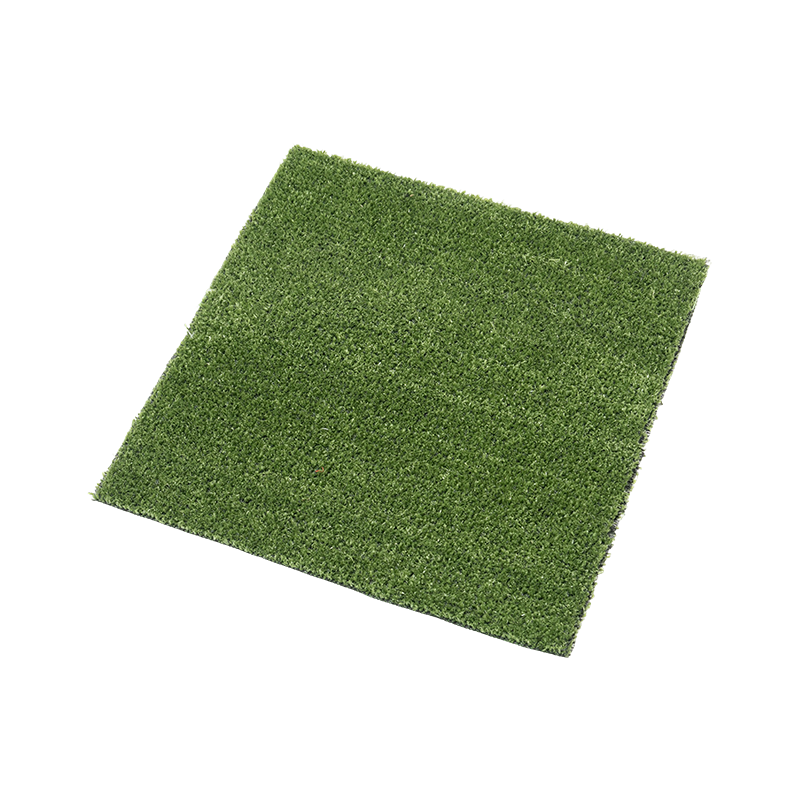 Artificial Turf GrassArtificial turf refers to simulated grass made from synthetic fibers (primarily petrochemical materials such as polyethylene, polypropylene, or nylon). It is produced ...View Product →
Infill Choice Drives Heat, Feel and Cleaning
Infill is the cheapest part of the build and the one users notice most. Sand gives a firm, cool surface; rubber gives a springy, hot one. On south-facing sites the difference is not cosmetic — it decides whether the area is usable at two in the afternoon in July.
| Infill | Feel underfoot | Heat behaviour | Maintenance notes |
|---|---|---|---|
| Silica sand | Firm, stable | Coolest of the common options | Heavy to handle, needs periodic top-up, good dust control |
| SBR rubber | Soft, springy | Reads hottest in direct sun | Lowest cost; crumb migration and black marks on shoes and clothing |
| EPDM rubber | Soft, colourfast | Moderate | Colour stays better than SBR, higher unit cost |
| TPE | Soft | Moderate | Low odour, recyclable, premium price |
| Cork or organic blends | Soft, natural look | Cools faster than rubber | Can degrade and blow away; requires more frequent topping |
| Coated sand | Firm | Cooler | Less dust than plain sand, good for indoor or covered areas |
Whichever you choose, plan for the first top-up within 12–18 months. New turf settles, and a surface that starts 5 mm light will expose fibre bases long before the warranty expires.
Layout, Colour and Edges
Design the play area around the equipment, not around standard roll widths. Curved safety zones, coloured activity circles and drainage channels cut into a plan are the reason so many installed surfaces end up with patch seams in the middle of a running lane.
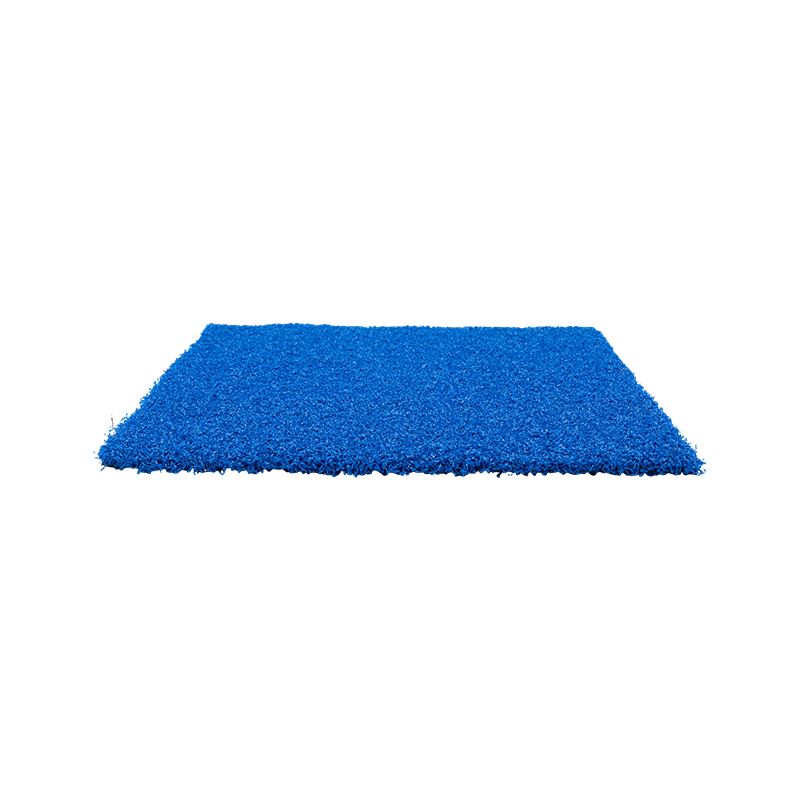
Coloured turf is a legitimate safety tool as well as decoration: contrasting zones help children recognise boundaries and keep them clear of swing arcs, and lighter tones reduce the surface temperature a few degrees. Keep graphics simple, place seams outside high-traffic corners, and specify edge restraint that sits flush with the surrounding paving so nothing becomes a trip hazard.
 Colored Artificial TurfArtificial Grass Gardens refer to horticultural designs that use synthetic fibers (artificial turf) to simulate natural grassland landscapes. These gardens achieve a g...View Product →
Base, Levels and Drainage
Water should leave the surface, never sit on it. A play area needs a structural base, a separate fines layer and a consistent fall, because turf laid over an uneven sub-base telegraphs every hump within months.
- Excavation: typically 150–250 mm, deeper where a thick shock pad or heavy traffic is expected.
- Geotextile separator: stops fines migrating into the drainage stone.
- Aggregate layer: 100–150 mm of crushed stone compacted to about 95% of maximum dry density.
- Fines layer: 20–30 mm of compacted fine aggregate or porous asphalt, screeded to a 1% fall toward the outlet.
- Verification: check levels with a straight edge and flood the finished base before laying turf — locating a low spot afterwards means lifting the surface.
Installation Sequence
The sequence matters as much as the materials, because each step protects the one beneath it. A typical installation runs like this:
- Mark out the area, confirm equipment locations and fall zones, and photograph the existing site condition.
- Excavate, then compact the subgrade and install the geotextile separator.
- Place and compact the aggregate base, then the fines layer, verifying levels and the drainage fall.
- Fit edge restraints and connect outlets to the drainage system.
- Lay the shock pad, keeping joints tight and fixing it only where the design requires.
- Unroll turf, allow it to relax, then cut, seam and fix the perimeter with appropriate nails or adhesive.
- Infill in two or three passes, brushing between them so the fibre stands upright.
- Brush the finished surface, clean up, and record photographs plus the impact test data for handover.
Budget Drivers and Procurement Checks
Most overspend in play surfacing comes from changes made after the base is finished. Fixing specification, levels and access before the ground is opened is worth more than any discount on the turf itself.
- Shock pad rating — a higher fall height requirement can add significant cost per square metre.
- Infill type and depth — sand is cheap but heavy; TPE and cork carry a premium.
- Site access and haul-off — barrows through a narrow side gate cost more than machine access.
- Custom shapes and colours — cut-and-shaped layouts reduce on-site waste compared with trimming standard rolls, particularly for kindergartens and landscaped courtyards where the design matters as much as the durability. Reviewing custom turf production early usually simplifies the plan.
- Base condition — existing porous asphalt may need patching rather than replacement, which changes the budget materially.
Ask every supplier for the same five documents: impact test report for the full assembly, drainage rate data, UV weathering results, a written installation method statement and the warranty terms with the maintenance obligations spelled out.
Keeping the Surface Safe After Handover
Maintenance is where a good installation either holds its rating or quietly loses it. Budget for a simple routine rather than reacting to failures.
- Brush high-traffic and shaded areas monthly; brush all areas quarterly.
- Top up infill annually and after every deep clean — impact performance depends on it.
- Remove leaves and debris from drains before the rainy season; a blocked outlet is the fastest route to a lift at the low corner.
- Inspect seams, edges and fixings twice a year and after storms.
- Sanitise pet or food areas with a mild detergent and rinse thoroughly.
- Re-test impact performance every few years on public sites, and sooner after major equipment changes.
Frequently Asked Questions
How much fall height can artificial turf handle on its own?
Very little. Turf and infill alone typically contribute a small part of the absorption; meaningful fall-height ratings, such as 1.5 m or 2.0 m, come from adding a tested shock pad or an engineered deep-infill system beneath the turf.
Is artificial turf hotter than natural grass?
Yes, noticeably. On a sunny 32 °C day, dark synthetic surfaces can read 60–70 °C while adjacent lawn stays near 30–35 °C. Shade structures, lighter turf and sand or cork infill reduce the gap, and use should simply be redirected to cooler hours during heatwaves.
Is synthetic grass better than natural grass for a play area?
It depends on the site. Artificial turf wins on all-weather use, mud control, uniform accessibility and predictable running surfaces; natural grass wins on surface temperature and initial cost where climate and drainage are favourable. For shaded, heavily used or wheelchair-accessible areas, synthetic usually prevails.
Can synthetic turf be installed over concrete?
Yes, but only with an appropriate shock pad and a drainage route, since water has to leave the surface somehow. Concrete bases need particular care with impact testing, because there is no forgiving sub-base below the pad.
How long does a play-area surface last?
Eight to twelve years is a fair expectation for a correctly specified product under public use, with brushing and annual infill top-ups. Shaded areas and heavy equipment traffic age faster, so plan replacement around inspection findings rather than a calendar date.
What does installation cost depend on?
Chiefly the required fall height, the infill type, base condition, access for machinery and any custom shaping or colour work. Request itemised pricing for the pad, turf, infill, base and labour so that substitutions are visible rather than hidden.

 +86-19742095266
 zoe_canyoograss@163.com
 No.18 Baqiao, Xinji Yizheng, Yangzhou, Jiangsu. P.R. China
