 Get in touch
 English
 English
 中文简体
 русский
 Español
 عربى
 Français
 Português
 Deutsch
 বাংলা
 日本語
 Polskie
 italiano
 Türk
 한국어
 ไทย

Short answer: astroturf for playgrounds is a short-pile synthetic grass surface, usually 25 to 30 mm high, laid over a certified shockpad and tested to EN 1177 or ASTM F1292 so that its critical fall height is at least as high as the tallest platform on the site. Appearance is the last decision, not the first. If the fall-height rating does not cover the equipment, the surface fails inspection however good the grass looks.
Playground projects usually go wrong in one of three places. The fall height is measured from the wrong platform, the infill is changed without re-checking the shockpad, or drainage is worked out after the sub-base has already been compacted. The sections below cover the specifications, the test numbers and the procurement questions that catch those problems before delivery day.
Content
- 1 What Astroturf for Playgrounds Actually Is
- 2 The Numbers That Decide Whether a Surface Passes
- 3 How to Specify Yarn, Pile Height and Infill
- 4 Infill Choice, in Plain Terms
- 5 Drainage, Heat and What Maintenance Really Involves
- 6 Where Playground Turf Performs Best
- 7 Budget, Warranties and the Questions to Ask Before Ordering
- 8 Frequently Asked Questions
What Astroturf for Playgrounds Actually Is
Playground turf is a separate product category from both landscape turf and sports turf: it borrows durability from sports systems and softness from landscape systems, but it is specified by fall height rather than by ball roll or colour.
A sound playground build-up normally has five layers, and each one affects the others:
- Sub-base: compacted aggregate or a concrete slab, graded so water leaves the surface quickly.
- Shockpad: a certified impact layer, typically 15 to 60 mm of closed-cell PE foam, PU-bound rubber or mineral-bound matting.
- Turf backing: a permeable primary and secondary backing that holds the tufts and lets water through.
- Yarn: fibrillated or monofilament polyethylene, often 30 to 60 mm pile for play use, with a specified dtex and tuft gauge.
- Infill: silica sand, EPDM or TPE granulate, cork, or a coated sand blend that stabilises the fibres and tunes firmness.
The practical difference from a football pitch is simple. A pitch is judged on ball behaviour, traction and energy restitution. A playground is judged on what happens to a child who falls from the top of the climbing frame, and that is measured, documented and inspected.
The Numbers That Decide Whether a Surface Passes
Three numbers control compliance, and all three come from a physical drop test rather than from a brochure: the critical fall height, the Head Injury Criterion (HIC) and the peak deceleration (G-max).
Critical fall height, HIC and G-max
A surface passes ASTM F1292 when, at the specified drop height, G-max stays at or below 200 g and HIC stays at or below 1000; EN 1177 works on the same HIC logic. The critical fall height is therefore the tallest drop the system can absorb while still passing, and it must be compared with the free height of fall of the equipment, measured under EN 1176-1 rules rather than estimated by eye.
| Build-up | Typical critical fall height | Where it makes sense |
|---|---|---|
| 25 mm sand-dressed turf, no shockpad | Below 1.0 m | Toddler zones and decorative areas with no climbing equipment |
| 25 to 30 mm turf over a 20 to 30 mm shockpad | Around 1.0 to 1.5 m | Kindergartens, low play frames, seating and landscape edges |
| 30 mm turf over a 40 to 60 mm shockpad | Around 1.5 to 2.0 m | School yards, climbing units, small slides |
| 35 to 40 mm turf over a high-density pad or engineered loose-fill base | 2.0 to 3.0 m | Public parks, tall multi-deck structures, zip lines and swings |
Slip, abrasion and surface heat
Fall attenuation is only the entry ticket. A playground surface also has to stay usable in summer, resist abrasion from shoes and scooters, and drain hard rain without ponding. On a hot day, synthetic grass in direct sun can run well above air temperature, and darker yarns absorb more of it. Lighter colours, TPE or cork infill, shade sails and a light watering before peak hours all reduce that effect considerably.
How to Specify Yarn, Pile Height and Infill
Specify from the fall height downward, not from the grass upward: pick the pad that covers the equipment, then choose the turf and infill that keep the system inside the required G-max and HIC, then confirm drainage.
- Measure the free height of fall and the use zone of every item, and note the highest one.
- Select a shockpad rated above that height with a documented test report, and add a tolerance of roughly 10 percent for aging and compression.
- Choose pile height and yarn: 25 to 30 mm sand-dressed for gentle play, 30 to 40 mm with granulate infill for busier sites.
- Fix the infill depth and granulate type, and state it in the contract so it cannot be swapped on site.
- Confirm the whole build-up, not just the pad, carries a test report at the required drop height.
Design detail matters too. Coloured inlays for hopscotch, road markings, numbers and play zones cost little at the planning stage and are difficult to add later, because they change the tufting plan rather than the finished surface.
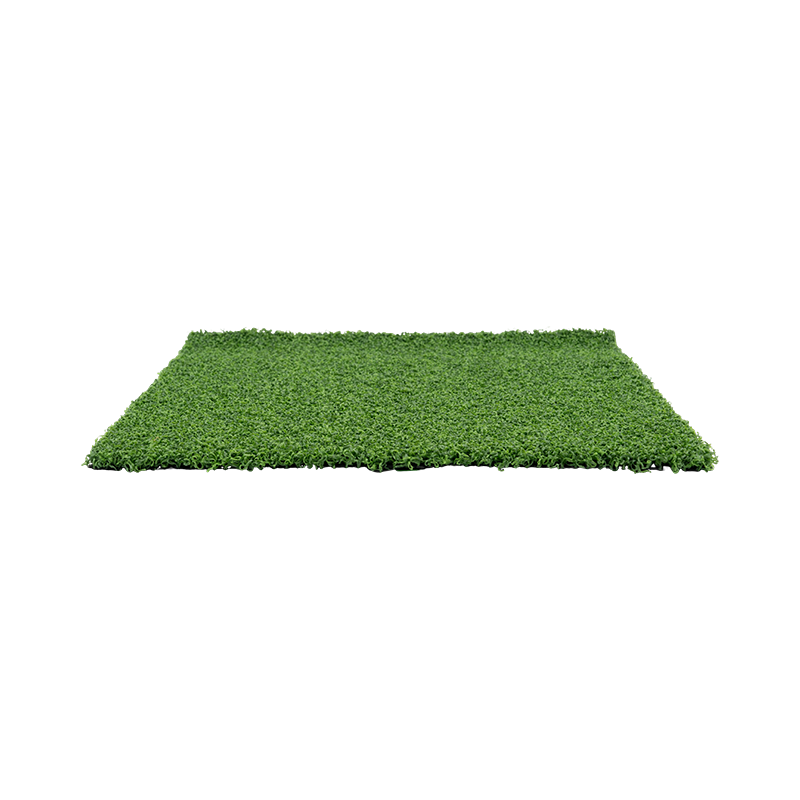
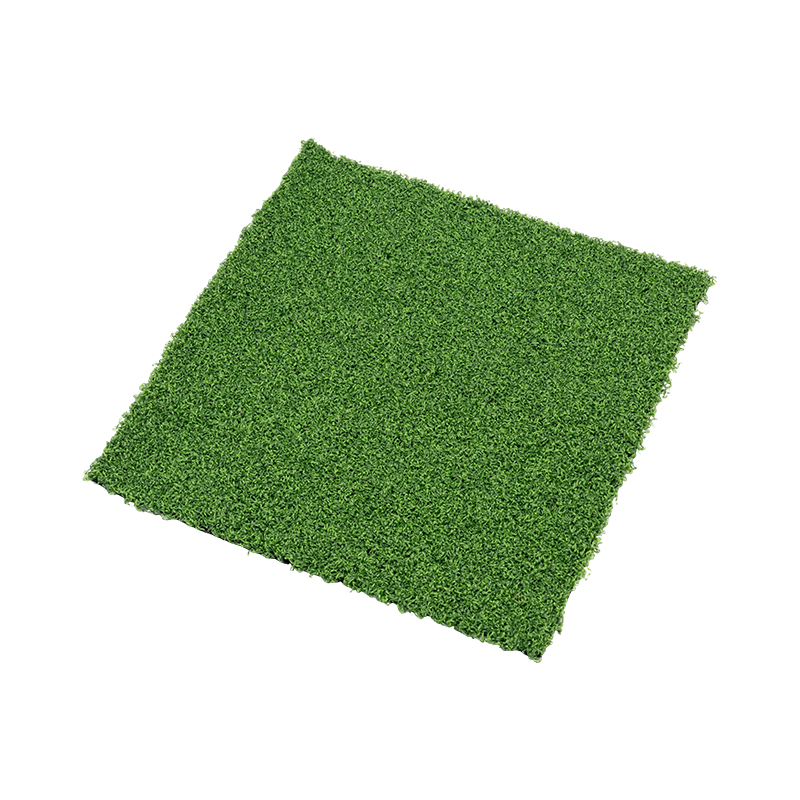 Playground Artificial Turf with Shock-Absorbing SystemEngineered for play areas with shock-absorbing infill options; review safety testing and long-term infill costs before specifying.View Product →
Infill Choice, in Plain Terms
Infill affects heat, firmness and long-term top-up cost more than most buyers expect, so it deserves its own decision rather than being left to the installer.
| Infill | Strengths | Watch out for |
|---|---|---|
| Silica sand | Stable, low splash, inexpensive top-up, firm underfoot | Runs hotter, can dust, less energy absorption on its own |
| EPDM granulate | Soft, available in colour, good energy absorption | Can migrate into shoes and drains, needs periodic topping up |
| TPE granulate | Lighter colour, cooler surface, no crumb rubber concerns | Higher material cost |
| Cork or natural blends | Natural look, cooler underfoot, pleasant feel | Decomposes slowly, requires more frequent replenishment |
| Coated sand | Reduced dust, good stability, consistent depth | Premium price, fewer suppliers |
Whatever the choice, write the depth into the specification and check it with a depth gauge at handover. A 5 mm shortfall in infill can move a system out of compliance long before the warranty ends.
Drainage, Heat and What Maintenance Really Involves
Maintenance is modest but not zero: plan for roughly two to four site visits a year rather than the "no upkeep" claim that sells domestic lawns.
- Brush or power-brush high-traffic lines to lift flattened fibres.
- Top up infill where it has migrated, usually around slide exits and under swings.
- Clear leaves and litter so the backing stays permeable.
- Inspect the shockpad after any vandalism or excavation work, since a cut pad loses its rating locally.
- Commission an impact test every few years, and always after major equipment changes.
Drainage is decided long before the turf arrives. Permeable backing handles rainfall, but only if the sub-base is graded and the perimeter edging does not dam water at the low corner. On rooftop or podium decks, confirm the slab falls and outlet capacity first; the turf is the least of the issues there.
Where Playground Turf Performs Best
Synthetic playground grass earns its cost in enclosed, high-traffic or hard-to-maintain spaces, and struggles where heat, shade or budget are badly managed.
- Kindergartens: short pile with a soft pad, coloured zones and no loose granulate that small children can pick up.
- School yards: a mixed surface — turf for play and quiet areas, harder paving for circulation and ball games.
- Backyards: 25 to 30 mm turf with a light pad under swings and climbing frames.
- Rooftops and podium decks: lightweight pads and strict attention to drainage and edge termination.
- Public parks: higher pads and a documented annual inspection routine to satisfy insurers.
A useful reference is the kindergarten installation in our project archive, where coloured zones, soft edging and a shallow pad were combined to keep the whole play area at one consistent level.
Budget, Warranties and the Questions to Ask Before Ordering
Expect the finished playground surface to cost roughly two to three times a plain landscape lawn of the same area, because the pad, edging, certified testing and installation labour are all extra line items.
The main cost drivers are pad thickness and density, pile height and yarn dtex, infill type, sub-base condition, access for machinery and the number of colour changes. A tight urban site with no crane access can cost more in labour than in materials.
- Is the test report issued for this exact build-up, or for a different pad and yarn combination?
- Who carries out the post-installation impact test, and is it included in the price?
- What pad thickness tolerance is guaranteed on delivery, and how is it verified?
- What does the warranty exclude — heat damage, cigarette burns, bicycle kickstands, vandalism?
- How is infill depth checked at handover, and what top-up is included in year one?
For irregular shapes, themed layouts or multi-colour designs, a custom turf project is usually the cleaner route than cutting and joining standard rolls on site, because tuft direction, colour runs and edge details are resolved at the factory.
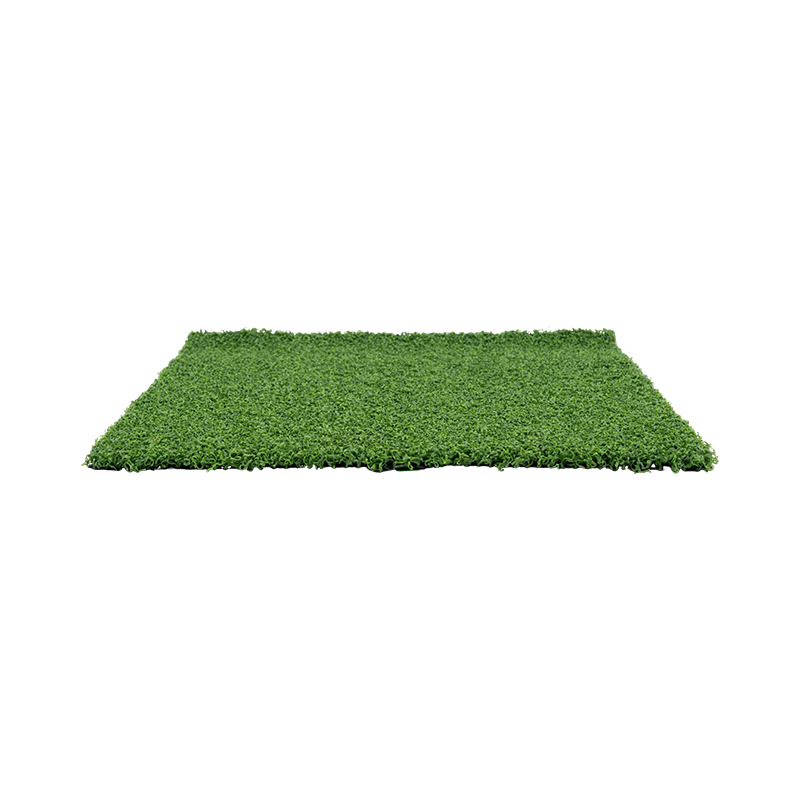
 Colored Artificial Turf for Themed and Custom LayoutsDecorative PP+PE turf for multi-colour and irregular layouts; suited to courtyards, play areas and commercial landscaping with low maintenance.View Product →
Frequently Asked Questions
Is astroturf safe for playgrounds?
Yes, when the complete system has been tested to EN 1177 or ASTM F1292 at or above the free height of fall of the equipment, and when it is installed over a properly graded sub-base. Untested turf over bare ground is not a safety surface, whatever its pile height.
What pile height should a playground use?
Most playgrounds sit between 25 and 40 mm. Short sand-dressed turf feels neater and cooler to specify for toddlers, while 30 to 40 mm with granulate infill suits busier sites. The pad, not the pile, does most of the fall-absorbing work.
Can playground turf be laid on concrete?
Yes, provided a shockpad is bonded or loose-laid between the slab and the turf, and drainage is handled at the perimeter or through outlets. Concrete is common on rooftop and podium decks.
Does it get too hot for children in summer?
It can. Synthetic surfaces in full sun often run noticeably hotter than air temperature. Lighter yarn colours, TPE or cork infill, shade and a quick watering before play all bring surface temperature down.
How long does a playground surface last?
Typically eight to twelve years for the turf and ten years or more for a quality pad, depending on traffic, UV exposure and maintenance. Infill top-up and periodic brushing matter more than most buyers assume.
Is rubber mulch a better option?
Loose-fill rubber is cheaper up front and absorbs falls well, but it migrates, needs regular raking and is harder to keep clean. Bonded turf gives a firmer, more predictable surface and easier access for wheelchairs and pushchairs.
Decide the fall height first, then the pad, then the turf, then the infill, and keep the test report attached to the purchase order. That order of work is what separates a playground that passes inspection in year one and still passes in year eight from one that looks right on opening day and quietly drifts out of compliance.
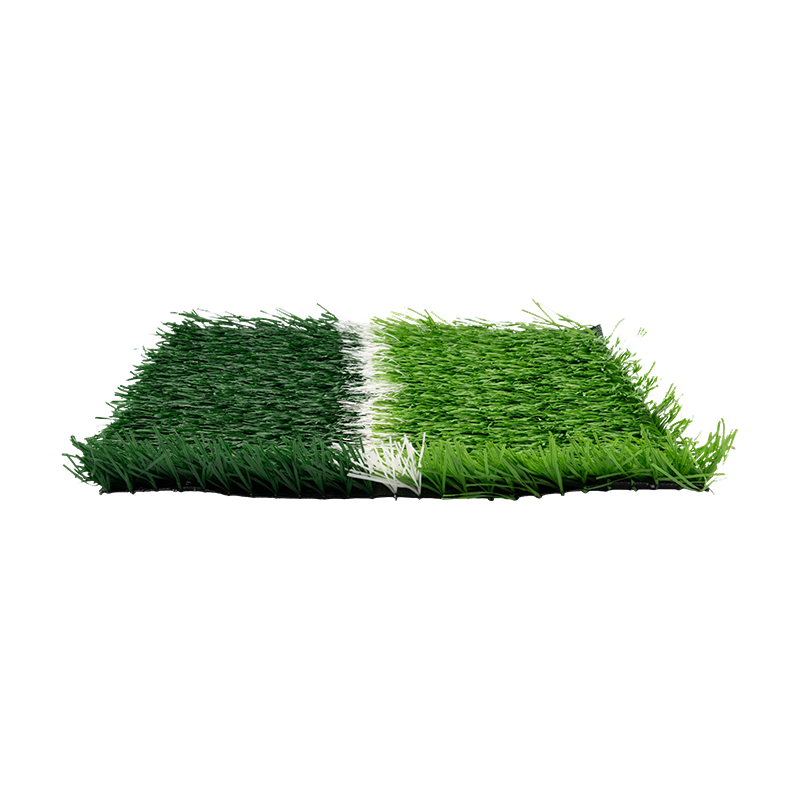 Sports Artificial Turf for Fields and Multi-Use FacilitiesBrowse sport-specific synthetic turf for soccer, tennis, hockey and school playgrounds; compare fiber, drainage and installation quality.View Product →

 +86-19742095266
 zoe_canyoograss@163.com
 No.18 Baqiao, Xinji Yizheng, Yangzhou, Jiangsu. P.R. China
