 Get in touch
 English
 English
 中文简体
 русский
 Español
 عربى
 Français
 Português
 Deutsch
 বাংলা
 日本語
 Polskie
 italiano
 Türk
 한국어
 ไทย

Artificial Turf Playground Surfaces: Building a Tested Fall-Safe System
Artificial turf playground surfaces are synthetic grass systems built as a safety surface, not as a lawn. In practice that means four layers working together — a drained sub-base, a shock-absorbing pad, a short-pile turf carpet and infill — tested as a single assembly to a stated critical fall height that matches the play equipment standing on it.
The most useful rule of thumb: buy the fall height, not the fibre. Two carpets that look identical from above can behave completely differently under a 2.5 m climbing frame, because the safety comes from the pad below and from how every layer was installed. Choose the tested assembly first, then the colour, then the price.
Content
- 1 What a Playground Turf Surface Is Made Of
- 2 Fall Height Is the Number That Decides the Specification
- 3 How Turf Compares With Other Playground Surfaces
- 4 Specifying the Turf, Infill and Pad
- 5 Design, Colour and Surface Heat
- 6 Installation: Where Most Problems Start
- 7 Maintenance and Inspection Through the Life of the Surface
- 8 A Short Buying Checklist
- 9 Frequently Asked Questions
What a Playground Turf Surface Is Made Of
Every compliant system contains the same four elements, and leaving one out or thinning it down is what causes failures two or three seasons later.
- Drained sub-base. Compacted aggregate or a concrete base laid to fall, so water leaves the site instead of sitting under the pad.
- Shock pad. A rubber or polyethylene pad, typically 20–60 mm, or inlaid tiles, selected from the manufacturer's tested fall-height table.
- Turf carpet. Short pile, usually 20–32 mm, with a perforated backing so it drains rather than trapping water.
- Infill. Silica sand, coated sand, TPE or EPDM granules brushed in to add weight, resist displacement and contribute a little extra impact absorption.
Landscape turf sold for gardens is roughly the same carpet without the pad and without the test data. That is the practical gap between a lawn product and a play product, and it is why a direct price comparison between the two is misleading.
Fall Height Is the Number That Decides the Specification
The critical fall height of the complete assembly — not the turf's weight, pile or warranty — is the figure an inspector, insurer or playground auditor will ask for.
Under ASTM F1292, an impact test drops a missile onto the surface and records two values: peak deceleration (G-max, which must stay at or below 200 g) and the Head Injury Criterion (HIC, at or below 1000). The drop height at which the assembly still passes becomes its critical fall height. EN 1177 does the same job for European projects and publishes the result in metres. In both systems the pad does most of the work while the turf and infill add a modest margin — which is why a 25 mm pad and a 40 mm pad can look the same from above and perform nothing alike.
Two practical consequences follow:
- Specify a pad rated comfortably above the equipment's maximum platform or climbing height, and confirm that the exact turf-plus-infill build was tested together with that pad.
- Impact performance shifts with temperature and saturation. Cold, stiff rubber absorbs less energy, so a system that passes in a warm laboratory can become marginal on a freezing morning. Ask for cold-condition data where winters bite.
How Turf Compares With Other Playground Surfaces
Turf wins on cleanliness, all-weather use and design freedom; it loses on upfront cost and on heat, and both of those are manageable if they are planned for rather than discovered.
| Surface | Fall protection | Routine upkeep | Accessibility | Main risk |
|---|---|---|---|---|
| Turf over shock pad | High, when pad and turf are tested together | Brushing, infill top-up, annual inspection | Good when firm and well drained | Heat build-up; capital cost |
| Poured rubber | High | Low, with patch repairs | Very good | Surface hardens and can crack |
| Engineered wood fiber | Good while at depth and loose | Frequent raking and topping up | Poor unless diligently maintained | Compaction, displacement, splinters |
| Pea gravel | Limited | Occasional raking | Poor | Loose material, unsuitable near young children |
| Sand | Limited | Raking and topping up | Poor | Displacement, hygiene, tracking indoors |
On whole-life cost, turf usually closes the gap with loose fill within a few years: no weekly raking, no annual reload of material, and one continuous surface can carry both the equipment zone and the surrounding open play area without a transition strip that children trip over.
Specifying the Turf, Infill and Pad
Work from the pad upwards and treat the carpet as the last decision rather than the first.
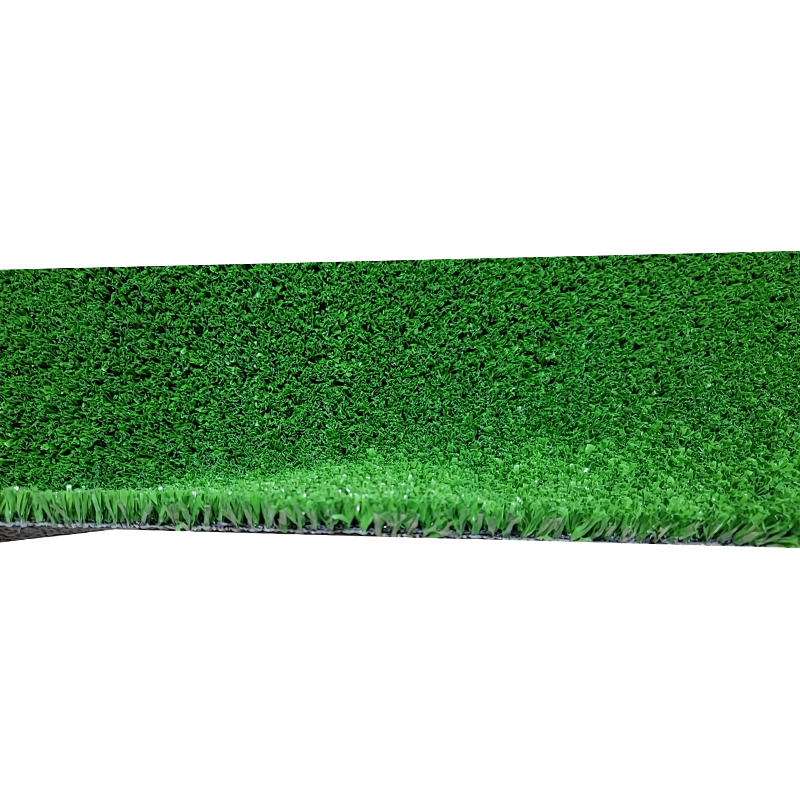
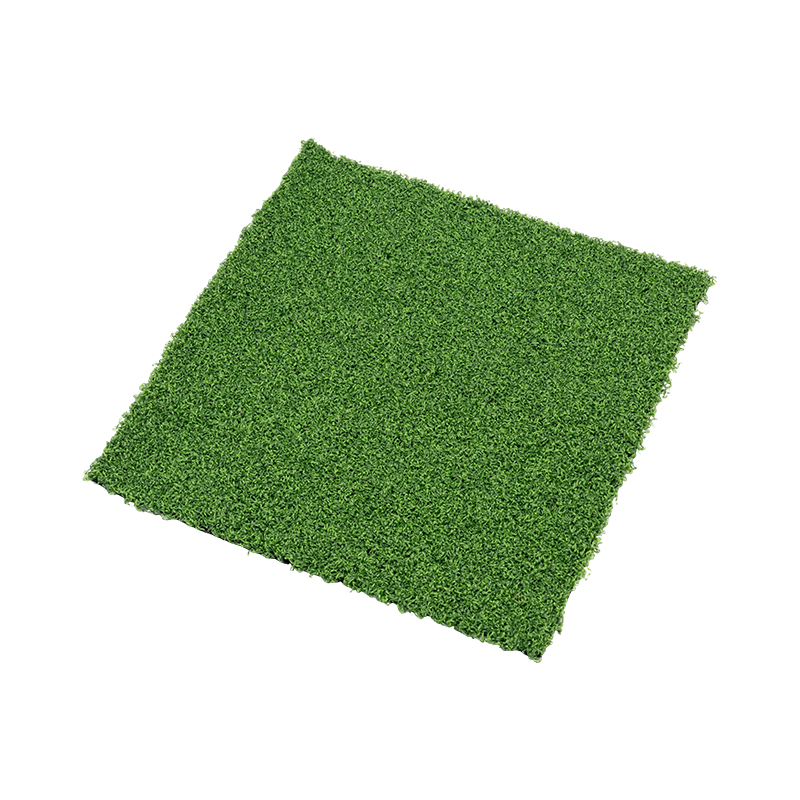 Artificial Turf for Playgrounds and Safety SurfacesA low-maintenance synthetic playground surface with cushioning granular infill; check its impact performance against the pad and infill you select.View Product →
| Parameter | Typical playground value | Why it matters |
|---|---|---|
| Pile height | 20–32 mm | Short pile stays firm underfoot and holds infill; long garden pile feels soft but shifts |
| Shock pad | 20–60 mm, matched to fall height | Delivers nearly all of the impact attenuation |
| Infill | Silica or coated sand, often 15–25 kg/m² | Adds weight, resists displacement, protects the backing |
| Drainage | Perforated backing plus graded base | Prevents ponding and keeps impact figures stable |
| UV stabilisation | Standard in outdoor yarns | Limits colour fade and fibre embrittlement |
Fibrillated yarns are the usual choice for heavy play: dense, good at holding infill, and forgiving of footprints. Monofilament yarns look more like real grass and suit decorative edges or themed corners. Either way, insist on the impact report for the precise combination of pad, carpet and infill you are buying. Where the play area meets planting, paths or seating, the wider landscape artificial turf range covers the non-safety surfaces so the whole scheme reads as one space.
Design, Colour and Surface Heat
Layout and colour choices cost almost nothing at design stage and are expensive to change once the carpet is cut, so settle play zoning before anything is ordered.
Separate toddler and junior zones, keep sightlines open from benches, and give running games a straight, wide lane rather than an awkward loop around equipment legs. Coloured turf handles games courts, road markings, hopscotch and themed islands in one material, which avoids the seams and level changes created by mixing products.
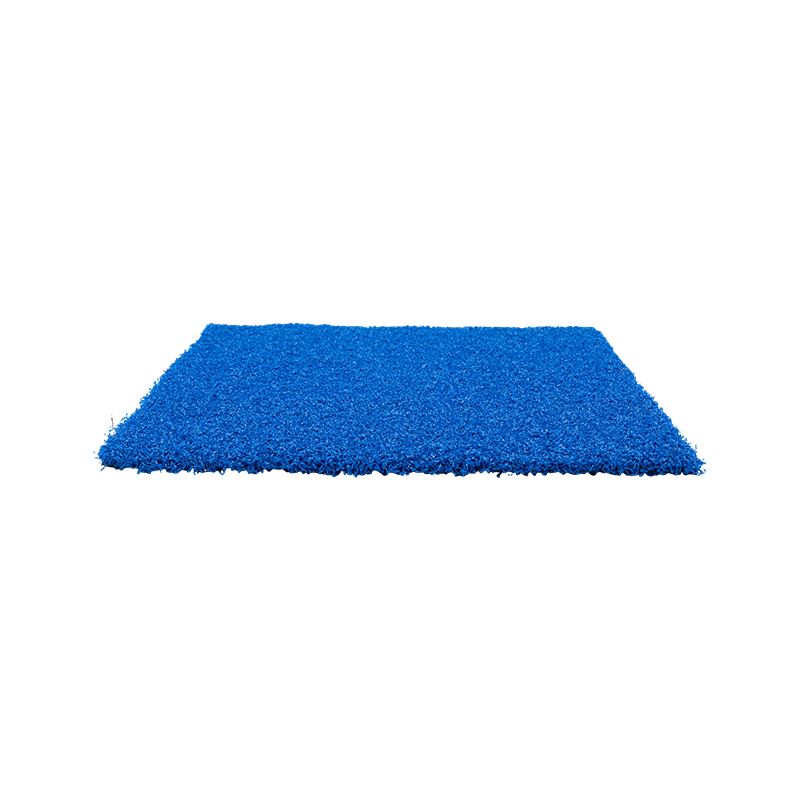
 Colored Artificial Turf for Play and Landscape AreasUseful for zoning play areas and adding courts or markings; its coloured synthetic surface can unify games and themed spaces while requiring low maintenance.View Product →
Heat is the one drawback that needs an honest answer at tender stage. On a still summer afternoon, a synthetic surface commonly measures 20–30 °C above a nearby lawn. That is rarely a burn hazard through shoes or clothing, but it is uncomfortable for bare feet and it keeps a play area unused at exactly the time children want it. Lighter colours, shade sails, site orientation, a misting line and simple water play all reduce it; drainage design decides how quickly the surface recovers after rain. Where the brief involves patterns, logos or irregular shapes, custom turf projects start from a drawing rather than a stock roll.
Installation: Where Most Problems Start
Almost every failure I see on playground turf traces back to the base or the seams, not to the yarn.
- Base not compacted in layers, so the surface settles and forms shallow pools.
- Shock pad joints butted but not taped, letting infill migrate into gaps.
- Seams placed under swings, slide exits or the busiest route across the space.
- Infill under-filled to save cost, leaving the pile flat, shiny and slippery.
- No edge restraint, so the carpet creeps and opens at the perimeter.
- Drainage falls built in the wrong direction, or outlets blocked by later landscaping.
Ask for the installation sequence in writing, including base thickness, pad fixing method, seam positions and the target infill weight per square metre. A contractor who can answer those four points precisely is usually a contractor who will not be back in eighteen months.
Maintenance and Inspection Through the Life of the Surface
A playground turf surface is low-maintenance, not no-maintenance, and the annual routine is short enough to run in a single morning.
- Brush or power-broom high-traffic lanes monthly to lift flattened pile and redistribute infill.
- Top up infill where levels drop, especially under swings and at slide run-outs.
- Clear drainage outlets and remove leaves before the wet season.
- Inspect seams, edges and pad joints twice a year; patch small lifts before water gets underneath.
- Re-test impact attenuation every few years, or whenever equipment is changed or moved.
Expect 8–12 years of service on a well-built system, with heavy-use patches showing wear first. Impact performance usually declines before the surface starts to look tired, which is precisely why the inspection schedule matters more than the aesthetic one.
A Short Buying Checklist
Six questions separate a specification you can defend from one you will be explaining later.
- What is the maximum fall height of the equipment, and what critical fall height does your tested assembly reach?
- Which laboratory report covers the exact pad, carpet and infill combination being supplied?
- What are the cold-weather and wet-condition impact figures?
- What infill type and weight per square metre are included, and is top-up material available locally?
- How does the system drain, and where does the water go?
- Does the finished surface meet the accessibility criteria for the routes and equipment the scheme requires?
Frequently Asked Questions
How thick should the shock pad be under playground turf?
Thick enough for the fall height above it, and no thicker than needed. Pads are usually supplied in 20–60 mm options, and each thickness carries a tested fall height for a given turf build. Going thicker than required is safe but adds cost and can make the surface feel overly soft and less stable underfoot, so match the pad maker's table to the equipment drawing.
Can turf be laid over an existing rubber surface or concrete?
Over sound concrete it is perfectly workable, provided drainage, edge fixing and the pad are designed for it. Over an existing rubber safety surface it is rarely advisable: the old pad has already lost part of its performance, the combined assembly has no test data, and trapped moisture between the layers becomes a long-term problem.
Does a playground turf surface meet accessibility standards?
It can, and often does, but the property belongs to the finished assembly rather than the carpet. Firm, stable, well-drained surfaces with tight seams and appropriate infill give the low rolling resistance that wheelchair users and pushchairs need; soft, over-filled or badly seamed installations fail in practice even when the material is suitable.
How long does it last, and when should it be replaced?
Typically 8–12 years for a well-installed system under normal school or public park use. Replacement is usually triggered by impact test results or by pad degradation rather than by appearance, so keep the original test reports and the maintenance log together — they are what a future inspection will be measured against.
Get the order of decisions right and the rest follows: confirm the fall height the equipment demands, pick a pad rated above it, buy a turf and infill build that was tested with that pad, then spend what remains on colour, shade and detailing. A playground surface is judged by how it behaves on the thousandth wet Tuesday, not by how it photographs on handover day.

 +86-19742095266
+86-514-83640988
 zoe_canyoograss@163.com
 No.18 Baqiao, Xinji Yizheng, Yangzhou, Jiangsu. P.R. China
Copyright © Yangzhou Canyoo Grass Carpet Co., Ltd. Rights Reserved
China Artificial Turf Manufacturer Custom Artificial Grass Supplier