 Get in touch
 English
 English
 中文简体
 русский
 Español
 عربى
 Français
 Português
 Deutsch
 বাংলা
 日本語
 Polskie
 italiano
 Türk
 한국어
 ไทย

Dog urine will not destroy a well-built artificial lawn, but it will find every shortcut in a badly built one. The fibers themselves, usually non-absorbent polyethylene or polypropylene, shrug urine off almost completely. What actually fails is everything underneath: the infill, the backing and the drainage base. Those three decisions are made at design time, long before the dog arrives, and they determine whether you get a lawn that rinses clean or a lawn that smells of ammonia every warm morning.
The practical summary is simple. A pet lawn with a perforated backing, a compacted washed-aggregate base and a mineral-based infill can stay odor-free for years with a light rinsing routine. A lawn laid on a thin sand bed with a solid latex backing will develop a persistent smell before the first summer is over, and it usually has to be pulled up within three years.
Content
- 1 What Dog Urine Actually Does to Artificial Turf
- 2 Why the Smell Comes Back After You Clean It
- 3 Design Choices That Decide Whether a Dog Lawn Survives
- 4 A Cleaning Routine That Keeps Urine From Winning
- 5 Mistakes and Warning Signs
- 6 Shared Pet Areas, Apartment Dog Runs and Commercial Lawns
- 7 Frequently Asked Questions
What Dog Urine Actually Does to Artificial Turf
Urine attacks a turf system in five ways at once, and only one of them is visible from standing height.
- Bacterial odor. Urine is roughly 95% water. The remainder is urea, uric acid, creatinine, salts and hormones. Urea itself is nearly odorless; the ammonia smell appears when bacteria in the infill and base break it down. That reaction needs moisture, so a shaded, poorly draining area smells far worse than a sunny, well-draining one.
- Salt and crystal deposits. When water evaporates faster than it drains, dissolved solids stay behind as white or yellowish crystals on the pile. Owners often mistake them for mold. They are urine salts, and they are a reliable sign that urine is sitting in the system instead of passing through it.
- Infill fouling. Silica sand and rubber crumb are porous. Once they absorb organic residue, they become a bacterial reservoir that releases odor every time the lawn gets damp, even weeks after the last accident.
- Matting and compaction. Wet infill compacts under paw traffic, especially in the one or two spots a dog prefers. Compacted areas drain more slowly, which starts the cycle again.
- Backing and seam fatigue. Repeated ammonia exposure and constant dampness stress low-grade latex adhesives, and seams or edges can lift. This is the only failure that is genuinely structural rather than cosmetic.
Why the Smell Comes Back After You Clean It
Odor returns because most cleaning treats the surface while the urine has already travelled into the layers below.
Liquid passes through the pile and through the perforations in the backing, carrying dissolved urea with it. Rinsing the top of the pile removes the residue that never soaked in, which is why a hose-down gives you two or three good days and then the smell returns. The fix is not a stronger cleaner; it is enough water volume to push diluted urine all the way through the base, plus an infill that does not hold on to it.
| Layer | What urine does | Why it matters | Mitigation |
|---|---|---|---|
| Fiber (pile) | Very little direct damage; some pigments fade unevenly under heavy ammonia load | Cosmetic, rarely structural | Rinse before deposits dry; keep the pile brushed upright |
| Infill (sand, rubber, zeolite) | Absorbs moisture and organic residue; becomes a bacterial reservoir | Main source of recurring ammonia odor | Use zeolite or antimicrobial infill; rinse deeply and top up annually |
| Backing (PU or latex) | Ammonia and constant dampness stress adhesives | Delamination, blistering, slow drainage | Specify perforated PU backing rather than a solid latex coat |
| Base and drainage | Hair, fine particles and salts clog the voids between aggregate | Water ponds, urine stays, odor intensifies | Compacted washed aggregate with geotextile; 1-2% fall away from buildings |
| Seams and edges | Repeated flushing weakens tape and adhesive | Loose seams, wrinkles, trip hazards | Professional seaming and drainage-safe adhesives |
Design Choices That Decide Whether a Dog Lawn Survives
Drainage is the first priority, infill is the second, and backing and seaming are third. If you get those three right, cleaning becomes a five-minute job instead of a weekly battle.
Drainage first
A proper dog area drains at roughly 300 mm per hour once the base is saturated. That means compacted washed aggregate under the turf, not builder's sand, plus a slope of 1-2% so surface water and diluted urine run off rather than pooling in the dog's favourite corner.
Infill second
Sand is cheap and it holds moisture. For pet areas, a mineral infill such as zeolite, or an infill blended with an antimicrobial additive, absorbs ammonia instead of releasing it and slows bacterial growth between rinses. Choose rounded, dust-free granules sized so they do not stick to paws and get tracked indoors.
Backing and seams third
Perforated polyurethane backing lets liquid pass through in a controlled way. Solid latex-backed turf, common in budget landscape products, traps moisture directly beneath the pile, which is exactly where you do not want it. Seams should be positioned away from the dog's usual toilet spot, because that is where flushing stress concentrates.
Specification checklist for a pet lawn
- Pile height of 30-40 mm with a dense stitch rate, so paws do not sink into the backing.
- Perforated backing, confirmed in writing by the supplier.
- Compacted aggregate base with a geotextile separation layer, not sand over soil.
- Zeolite or antimicrobial infill, or a lower-sand specification for covered runs.
- Curled, softer fiber in play zones where the dog turns and slides.
- Edge restraint fixed with pins or concrete, since urine softening the edge is a common failure.
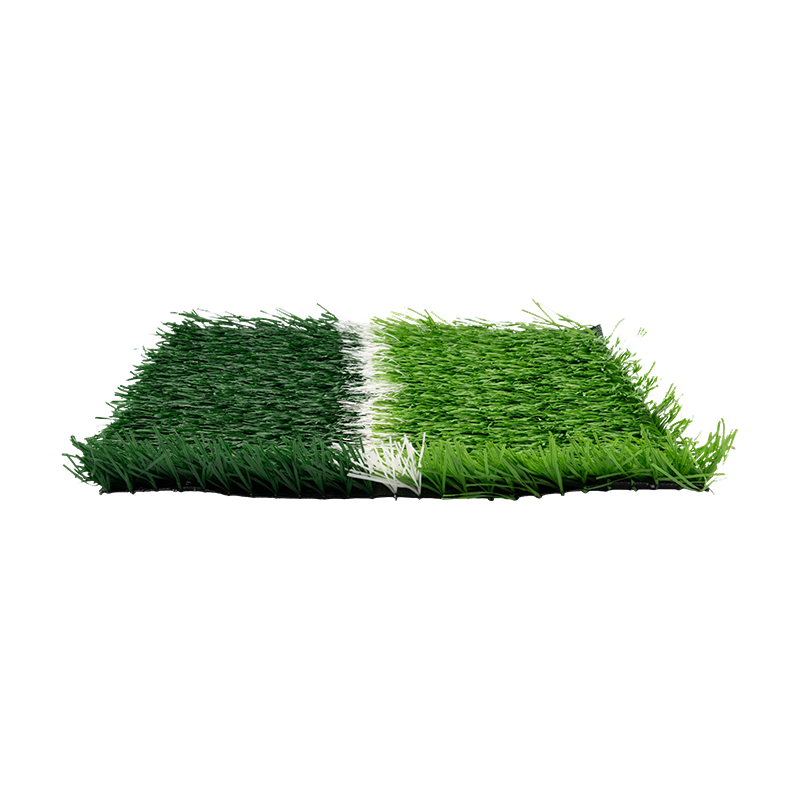
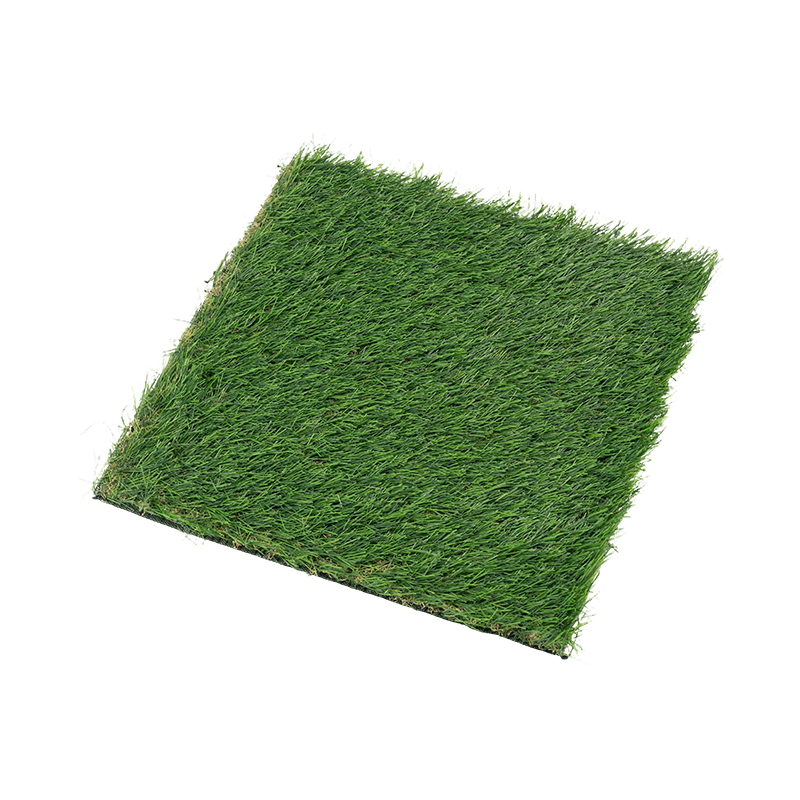 Artificial Turf for Pet Areas and Dog RunsPP+PE pet turf with 30 mm pile and drainage backing; suited to patios, balconies, and dog play areas where flushing and paw comfort matter.View Product →
A Cleaning Routine That Keeps Urine From Winning
Frequency beats strength. Several light flushings remove far more urine than one aggressive scrub with a harsh chemical, and they cost nothing but water.
| When | Action | Why it works |
|---|---|---|
| Daily | Pick up solids within a few hours | Removes the nitrogen source before bacteria convert it to ammonia |
| Two to three times a week in warm weather | Flush the whole area with a hose until water drains freely | Dilutes and pushes urea through the infill and base |
| Monthly | Apply an enzyme-based pet odor treatment and let it dwell while damp | Enzymes break down uric acid crystals that water alone leaves behind |
| Twice a year | Deep rinse, brush the pile upright, top up infill, check seams and edges | Restores drainage performance and catches lifting seams early |
Three warnings are worth repeating. Do not use bleach or strong detergents: they can bleach pigments, leave sticky residue that attracts dust, and shorten the life of the backing. Do not pressure-wash along seams, which is the fastest way to lift them. And do not sprinkle lightly during hot, sunny weather, because a thin layer of water keeps the surface humid without flushing anything away, which is ideal conditions for ammonia production.
Where the layout needs a dedicated relief zone, a gravel strip or a drainage-first build, it is usually cheaper to plan it into a custom turf project than to retrofit it later.
Mistakes and Warning Signs
Most premature turf replacements come from the same handful of avoidable decisions.
- Laying turf straight onto soil or sand, so every accident stays near the surface.
- Choosing a solid latex backing because it feels thicker and more expensive.
- Using rubber crumb infill in a small closed dog run, where there is no airflow.
- Installing in full shade, where the surface never dries out.
- Training the dog to urinate in the same square metre without ever alternating the spot.
Watch for white crystalline deposits, an ammonia smell that is strongest in the early morning, dark patches in shaded corners, permanently matted areas that no longer spring back, and seams that lift at the edges. Those five signs tell you whether you are dealing with a cleaning issue or a build quality issue. Documenting how similar drainage details were solved on completed sites is often more useful than a product brochure; the installation case studies on this site show base build-up and edge details on finished lawns.
Shared spaces fail faster than private gardens because the urine load is spread unevenly and nobody owns the cleaning routine.
For apartment dog runs, hotel pet relief areas and veterinary courtyards, the specification shifts: a thicker base, a larger drainage safety margin, an antimicrobial infill and a written maintenance schedule with defined rinsing intervals. A visible, well-drained relief zone also keeps dogs from urinating on decorative landscape areas, which protects neighbouring planting and hard surfaces. Commercial landscaping turf is normally engineered around exactly this trade-off between appearance and load capacity.
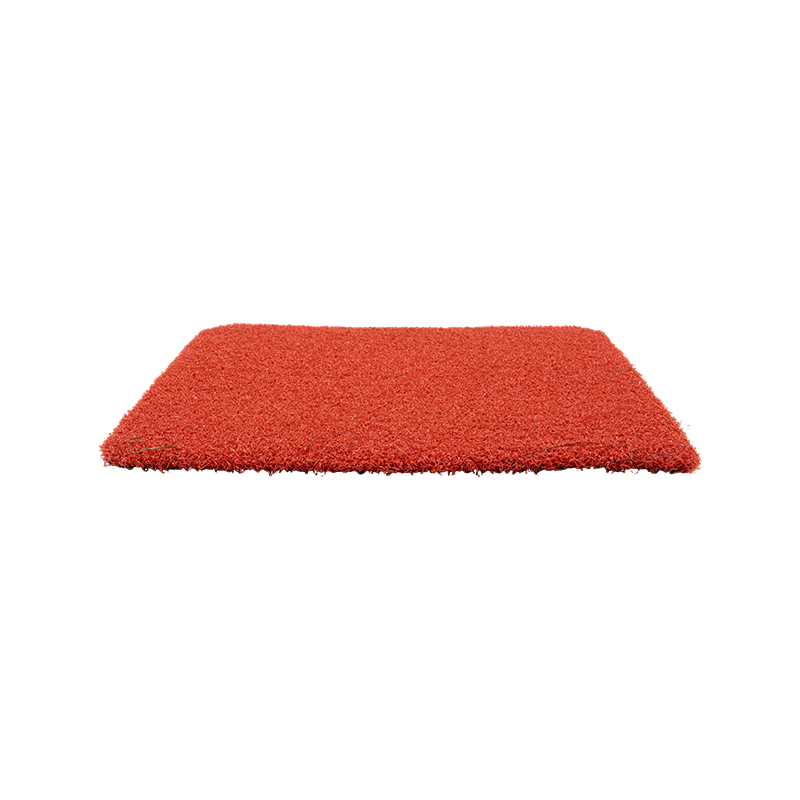
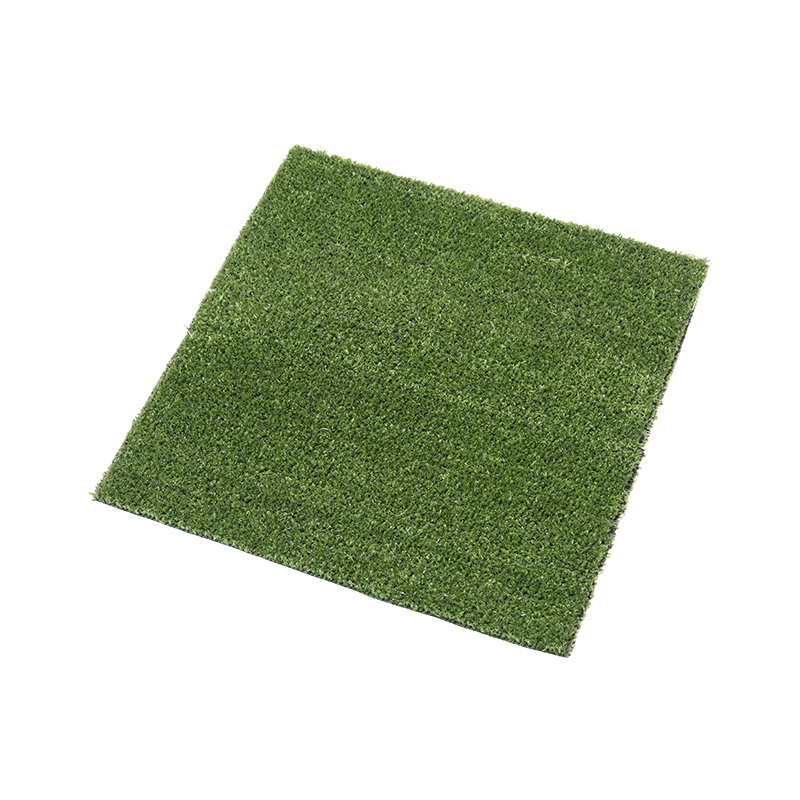 Commercial Landscaping Artificial Grass for High-Traffic Public SpacesPP+PE synthetic turf with 35 mm pile, UV-treated fibers and wear resistance for malls, hotels, offices, and public areas needing year-round green ground cover.View Product →
Frequently Asked Questions
Does artificial turf always smell if a dog pees on it?
No. Smell is a drainage and infill problem, not a turf problem. Non-absorbent fibers plus perforated backing, a compacted aggregate base and regular flushing keep ammonia levels low enough that most visitors will never notice anything.
Can I use bleach or vinegar on dog urine in turf?
Skip bleach: it damages pigment and backing adhesives and shortens the lawn's life. Diluted white vinegar, about one part vinegar to one part water, neutralises some surface odor and is safe on polyethylene fibers, but it does not break down uric acid crystals. Enzyme-based pet products do, provided you keep the area damp long enough for them to work.
How often should I rinse the lawn?
In hot weather, two to three times a week is realistic for one medium-sized dog; once a week is usually enough in cool, dry conditions. The test is simple: if water drains away within a few minutes and no ammonia smell lingers in the morning, your interval is correct.
Is a small backyard dog area still worth doing in turf?
Yes, if it is built as a drainage system rather than a carpet. Small yards need more attention to slope, base depth and the choice of a single designated toilet corner, because there is less surface area to absorb the same urine volume.
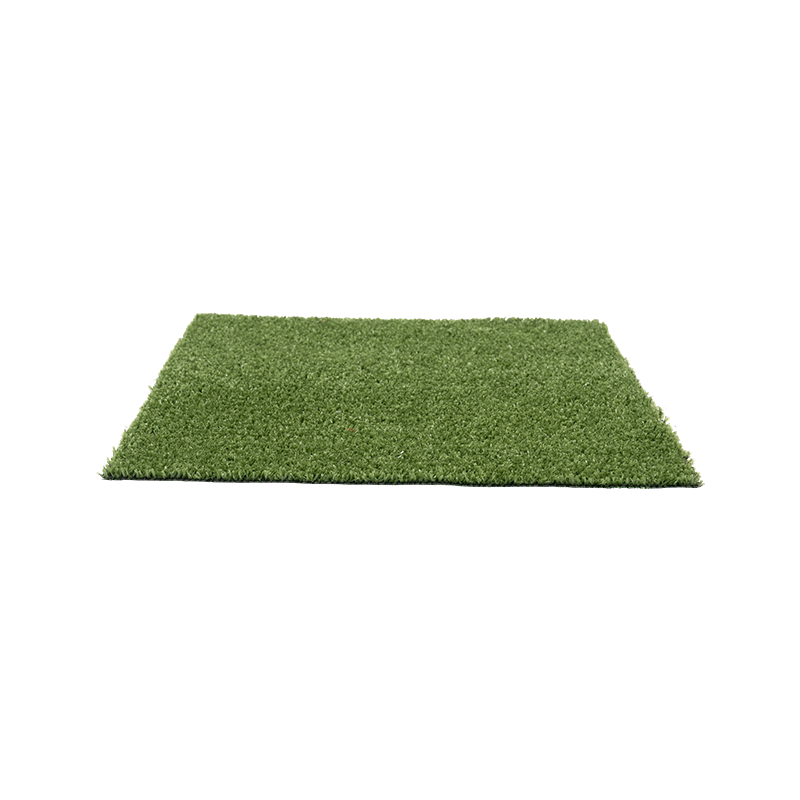
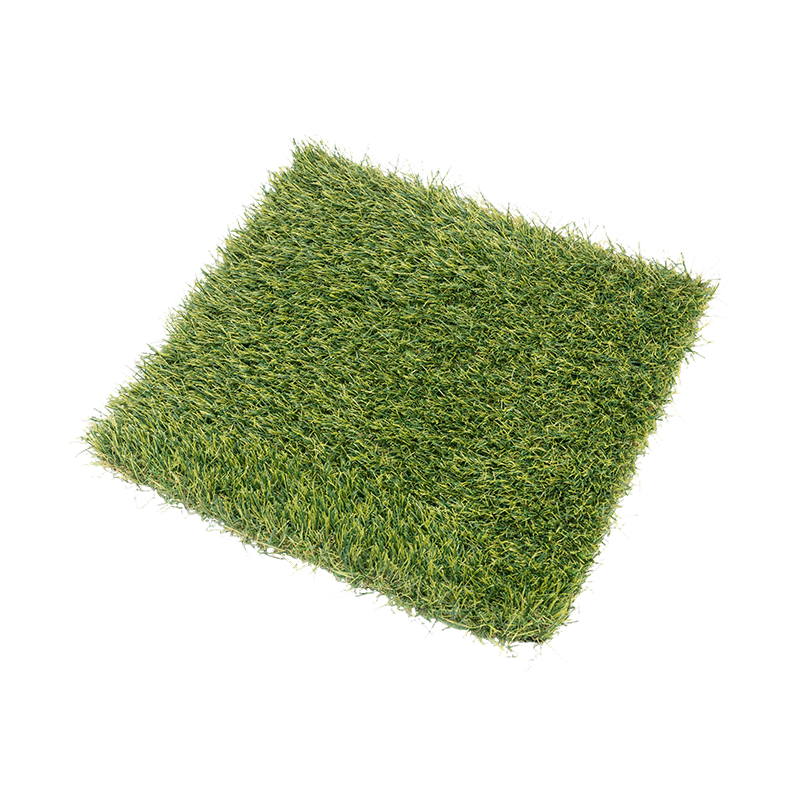 Backyard Artificial Grass for Lawns and Pet-Friendly LandscapingPP+PE residential turf with 30 mm pile for small backyard lawns, children's play, and pet areas; proper drainage and base preparation are essential.View Product →
The short version: dog pee ruins turf through the layers you cannot see, not the grass you can. Buy perforated backing, insist on a proper aggregate base, choose an infill that resists bacteria, and rinse more often than you think you need to. Do that, and a pet lawn stays a lawn instead of becoming an annual replacement cost.

 +86-19742095266
 zoe_canyoograss@163.com
 No.18 Baqiao, Xinji Yizheng, Yangzhou, Jiangsu. P.R. China
