 Get in touch
 English
  English
 中文简体
中文简体 русский
 Español
 عربى
عربى Français
 Português
 Deutsch
 বাংলা
বাংলা 日本語
日本語 Polskie
 italiano
 Türk
Türk 한국어
한국어 ไทย
ไทย
A landscape architect sends you a rendering of a backyard with a pool, a concrete walkway, and one unbroken plane of bright green lawn. In the drawing, the turf is perfect—no brown patches, no mow lines, no bare spots near the fence. That visual promise is one reason artificial turf keeps appearing in modern landscape projects. But the bigger shift is practical: synthetic grass gives designers a surface that behaves predictably, holds its color, and opens up spaces that natural lawns handle poorly.
The short answer to how artificial turf is changing modern landscaping is this: it is now treated less like a fake lawn and more like a design material. When it is specified with realistic expectations, it solves real problems—water restrictions, shade, slopes, maintenance budgets, and the need for year-round visual consistency.
Content
- 1 The Shift from Lawn Substitute to Design Tool
- 2 How Artificial Turf Expands the Landscape Designer’s Toolkit
- 3 Natural Grass vs. Artificial Turf: A Balanced Comparison
- 4 Performance, Heat, and Maintenance: What to Watch For
- 5 What to Look for in a Quality Artificial Turf Installation
- 6 Frequently Asked Questions About Artificial Turf in Landscaping
- 7 The Bottom Line for Modern Landscape Projects
The Shift from Lawn Substitute to Design Tool
Artificial turf used to be a last resort for homeowners who could not keep real grass alive. Today it often appears near the start of a design conversation. Landscape architects and contractors consider it for rooftops, entry courtyards, school play areas, and front yards where irrigation is limited. The reason is not just the color; it is the predictability.
Natural grass changes with the season, the shade pattern, and the amount of foot traffic. Artificial turf holds a uniform appearance and a stable surface. For a modern landscape—where composition, line, and repetition matter—that stability becomes a design advantage.
Why Modern Landscape Projects Include It
- Visual consistency: The surface stays green and even without waiting for recovery after heavy use.
- Low upkeep: No weekly mowing, no fertilizer schedule, no irrigation programming, and fewer weeds to manage.
- Usable in difficult spots: Narrow side yards, shaded corridors, slopes, and rooftop terraces are easier to make usable with synthetic turf.
- Clean, contained lines: Turf can be cut to precise geometric shapes, which supports the clean look of modern landscape plans.
How Artificial Turf Expands the Landscape Designer’s Toolkit
Once it is treated as a surface material instead of a grass substitute, artificial turf changes how a landscape can be organized. It allows designers to treat green space as a fixed element, not something that shifts with weather and wear.
Making difficult areas usable
Steep slopes, narrow side yards, shaded passages, and balconies rarely support healthy natural grass. Artificial turf turns these awkward zones into usable, comfortable spaces without excavation layers of topsoil, irrigation lines, and constant reseeding.
Blending turf with hardscape
Modern gardens often rely on contrast: smooth turf beside raw concrete, fine grass texture against large-format pavers, or green rectangles breaking up gravel paths. Synthetic turf holds its edge well, so planting strips, stepping-stone patterns, and border details stay crisp for years.
Creating continuity between indoors and outdoors
When a living room floor meets an outdoor terrace at the same level, the eye naturally follows the surface. Artificial turf extends the sense of green space right to the threshold, which is difficult to achieve with a natural lawn that becomes muddy or patchy near doorways.
Natural Grass vs. Artificial Turf: A Balanced Comparison
The choice is rarely about which is “better.” It is about which surface fits the site, the budget, and the level of care the owner will actually provide. The table below shows the main trade-offs without pretending one side is perfect.
| Consideration | Natural grass | Modern artificial turf |
|---|---|---|
| Maintenance | Weekly mowing, watering, fertilizing, aerating, overseeding, and seasonal cleanup. | Occasional rinsing, brushing to lift fibers, and prompt removal of pet waste or spills. |
| Water use | Needs regular irrigation in most climates, especially during hot, dry months. | No irrigation required, though a light rinse can cool the surface or clean dust. |
| Climate resilience | Turns brown or goes dormant under drought, shade, and heavy foot traffic. | Stays green in shade and dry conditions, but direct sun raises surface temperature. |
| Heat performance | Cooler surface because grass transpires and shades the soil. | Can become noticeably hotter than grass; lighter colors, shade, and infill choices help. |
| Lifespan | Long-lived as a living system if cared for, and can recover from damage. | Typically 8–15 years for landscape-grade turf, depending on quality, traffic, and sun exposure. |
| Upfront cost | Lower initial cost, but irrigation, maintenance, and replacement inputs add up. | Higher installed cost, with lower ongoing upkeep but eventual replacement needed. |
| Environmental impact | Supports soil biology, cools the air, stores carbon, and provides habitat. | Uses polymers and infill, has a manufacturing footprint, and may contribute to heat and runoff if poorly installed. |
Where Artificial Turf Makes the Most Sense
- Regions with water restrictions or frequent drought.
- Areas that become mud or dust, such as dog runs, side yards, and high-traffic paths.
- Rooftop terraces and balconies where natural soil depth is impossible.
- Commercial or public spaces that need a predictable appearance after heavy use.
Where It May Not Be the Right Choice
- Very hot urban sites with no shade and intense sun exposure.
- Projects where biodiversity, pollinators, or natural cooling are primary goals.
- Spaces that require a cool surface for barefoot use during summer.
- Clients who are unwilling to accept basic maintenance or eventual replacement.
Performance, Heat, and Maintenance: What to Watch For
Artificial turf is not maintenance-free, and it is not immune to climate. A well-designed installation plans for heat, drainage, and everyday use before the turf is laid.
Heat Management
Synthetic fibers absorb more heat than natural grass, especially when the outdoor temperature passes 30°C. In practical terms, a turf lawn in full sun can feel noticeably warm underfoot. Mitigation options include choosing a lighter green tone, using a lighter infill, installing turf only in partly shaded areas, and hosing the surface down for a few minutes before use. The design should not promise a cool lawn where the site gets all-day sun.
Drainage and Site Preparation
Most modern artificial turfs have drainage holes, but the base beneath them must also drain. Compacted clay soil, low spots, or missing edge constraints can cause pooling after rain. A professional installation usually includes a compacted aggregate base, a weed barrier, and proper sloping. The turf is the visible layer of a complete drainage system, not a standalone surface.
Pets, Children, and Everyday Use
Artificial turf is durable enough for children’s play and pet runs, but it still needs care. Pet waste should be picked up and the area rinsed with water. Spills, food, and plant debris should be removed so they do not break down into stains. Occasional brushing keeps the fibers upright and prevents flattening in high-traffic zones.
What to Look for in a Quality Artificial Turf Installation
Because artificial turf is a system, not just a roll of grass, selection should go beyond color and softness. Contractors and homeowners should compare the key components that decide how long the surface lasts and how it feels underfoot.
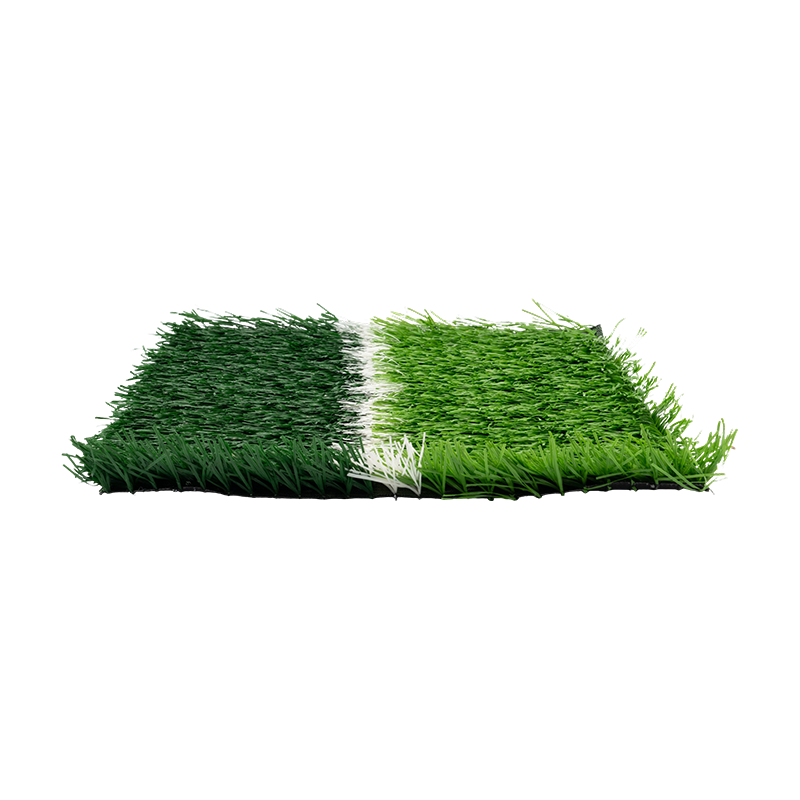
- Pile height and density: Landscape turf usually has a pile height around 30–40 mm. Denser turf looks fuller and holds its shape better, but it also costs more.
- Backing and drainage: Check that the backing is stable and that water can pass through quickly. Poor drainage is one of the most common causes of installation failure.
- Infill choice: Infill affects softness, support, and heat. Some options are cooler and more pet-friendly, while others are heavier and more stable. The correct infill depends on how the space will be used.
- Base preparation: A proper sub-base of compacted aggregate is more important than the turf itself. It prevents ruts, seams, and uneven edges.
- Warranty and installation quality: A strong warranty means little if the seams are poorly joined or the edges are not secured. Ask how the installers handle curves, high-traffic areas, and drainage.
Frequently Asked Questions About Artificial Turf in Landscaping
How long does artificial turf last?
Landscape-grade artificial turf typically lasts 8–15 years. Factors that shorten its life include heavy pet use, constant direct sun, poor drainage, and low-quality infill. A well-built base and regular brushing can add years to the surface.
Is artificial turf safe for children and pets?
Modern landscape turf is generally made from non-toxic materials, but the infill type matters. Pet owners should avoid infill that retains heat or releases dust, and they should rinse the turf regularly to prevent odor. Children can play on it safely, but the surface can get warm in summer, so shade and hydration are important.
How do you clean and maintain artificial grass?
Basic maintenance includes removing leaves and debris, brushing the fibers, and rinsing the surface with water. Pet waste should be removed immediately and the area washed with a mild cleaning solution. Stains are easier to manage if they are treated before they dry.
Does artificial turf get too hot to touch?
It can, on hot sunny days. Artificial turf absorbs heat more than natural grass. The exact temperature depends on the fiber color, infill type, ventilation, and direct sun exposure. Shade structures, irrigation misting, or using turf only in part of the landscape are practical alternatives.
Is artificial turf bad for the environment?
The honest answer is complicated. It saves water and eliminates lawn chemicals, but it is still a manufactured plastic product. Its environmental impact becomes more acceptable when it lasts a long time, replaces a lawn that cannot grow well in its location, and is installed over permeable materials. It is not a substitute for biodiversity, but it can be a practical choice in the right context.
The Bottom Line for Modern Landscape Projects
Artificial turf is not a universal replacement for plants, nor is it the plastic exception that ruins a natural garden. It is a designed surface with specific strengths and limits. When the goal is a permanent green surface with clean lines, low maintenance, and reliable performance, artificial turf can carry the design. When the goal is biodiversity, cooling, or seasonal character, living plants remain necessary. The best landscape design uses each material where it works best—and understands the difference before installation begins.

 +86-19742095266
  zoe_canyoograss@163.com
  No.18 Baqiao, Xinji Yizheng, Yangzhou, Jiangsu. P.R. China