 Get in touch
 English
 English
 中文简体
 русский
 Español
 عربى
 Français
 Português
 Deutsch
 বাংলা
 日本語
 Polskie
 italiano
 Türk
 한국어
 ไทย

Short answer: pet-grade artificial turf is one of the best surfaces you can put in a dog run, but only when the turf, the base and the drainage are specified for dogs rather than for a decorative lawn. Get those three right and the run stays usable for a decade or more; get them wrong and it smells by the first wet autumn.
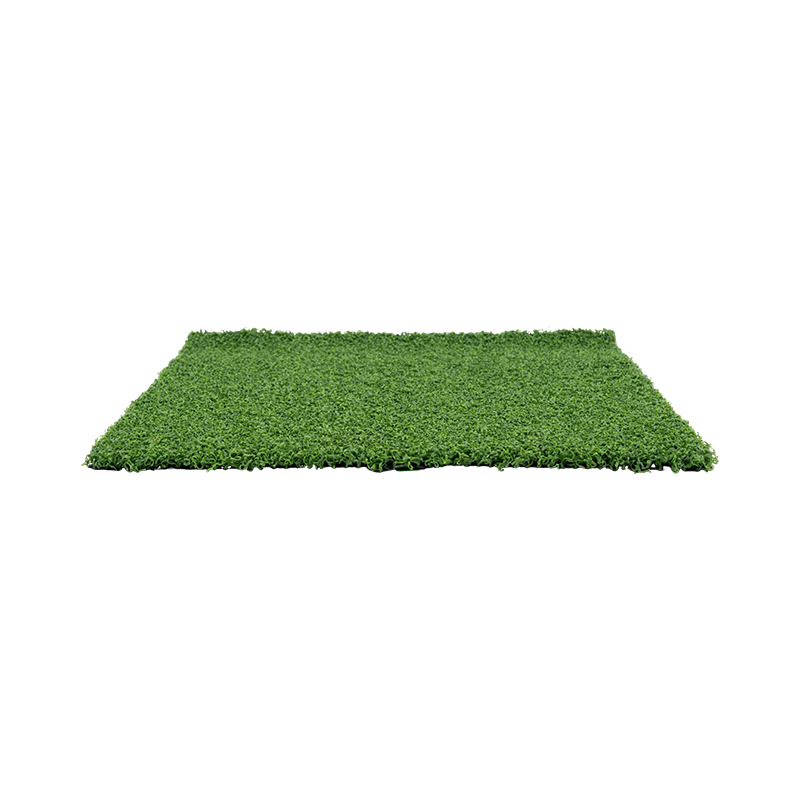
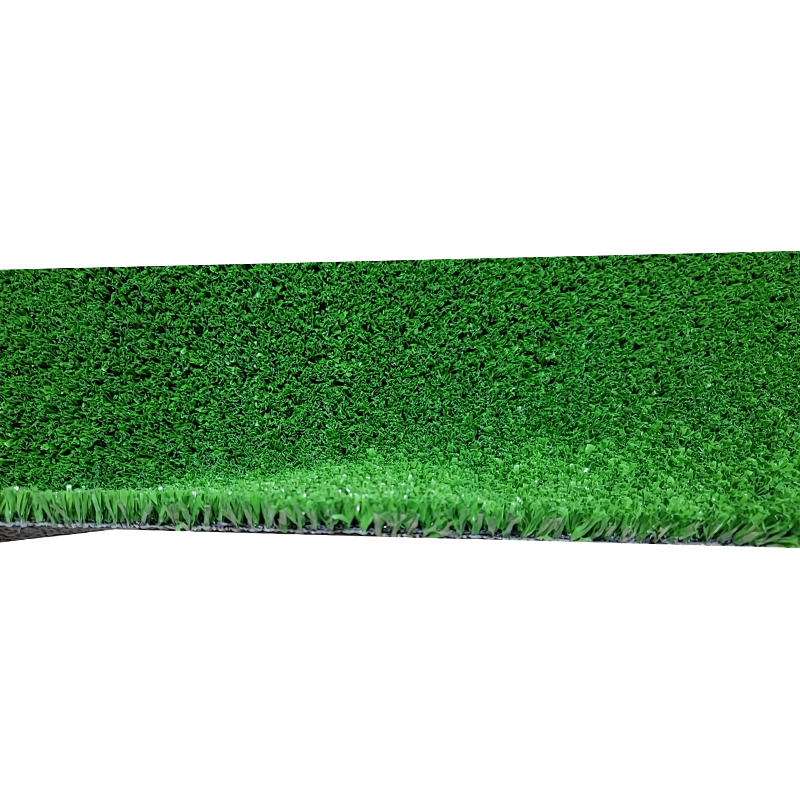
Artificial turf for dog runs means a short-pile synthetic grass system, usually 15 to 30 mm tall, with a flow-through or perforated backing laid over a compacted crushed-stone sub-base. Urine and rainwater pass through the pile and through the backing into the base instead of sitting in the fabric. That single technical difference separates pet turf from the longer, denser turf sold for verges and gardens.
Concentrated traffic is what makes a run a different problem from a lawn. One dog sprinting the same twelve-metre line five times a day wears the surface harder than a family garden is worn in a year, and it deposits nitrogen in the same few square metres every time.
Content
- 1 What Makes Pet Turf Better Than Mud, Gravel or Concrete
- 2 Pet Turf Specs That Decide Whether It Lasts
- 3 The Base and Drainage: Where Most Dog Runs Fail
- 4 A Cleaning Routine That Actually Removes Odor
- 5 Heat, Paws and Hot-Weather Safety
- 6 Layouts That Fit Small Yards, Side Passages and Rooftops
- 7 Cost, Lifespan and What to Ask Before You Sign
- 8 Frequently Asked Questions
What Makes Pet Turf Better Than Mud, Gravel or Concrete
Pet-grade turf beats every other common run surface on the two things owners actually notice: it drains like gravel and it is as kind to paws as grass, without turning into mud after rain. Natural grass loses that contest within a season or two, because a run is a small area carrying a high, concentrated nitrogen load. Urine scorches the blades, traffic thins the sward, and the bare patches that follow become mud that ends up on the kitchen floor.
Concrete is durable and easy to hose down, but it is abrasive on pads and unforgiving on older joints. Pea gravel drains well yet scatters under a sprinting dog and is uncomfortable for thin-padded breeds. Wood chips rot, splinter and need topping up every year. Turf is the only option that keeps a stable surface, drains through the pile and still reads as grass from the kitchen window.
| Surface | Drainage | Paw and joint comfort | Odor control | Mud and tracking |
|---|---|---|---|---|
| Natural grass | Poor once the sward thins | Good | Poor, urine burns patches | High after rain |
| Concrete | Excellent | Poor, hard and abrasive | Good | None |
| Pea gravel | Good | Fair, loose underfoot | Fair, holds odor in the bed | Low but scatters indoors |
| Wood chips | Fair, compacts and rots | Fair | Poor, stays damp | Medium |
| Pet artificial turf | Excellent over a drained base | Good, stable and cushioned by the base | Good with regular rinsing | None |
A well-built pet turf run usually stays serviceable for eight to fifteen years. In practice the turf outlives the base when the base was built properly, and the reverse when it was not.
Pet Turf Specs That Decide Whether It Lasts
Four specifications decide whether a dog run is still usable in year eight: pile height, tuft bind, backing construction and drainage rate. Everything else on a product sheet is secondary.
- Pile height of 15 to 30 mm. Short pile keeps paws on top of the surface, resists matting and is far easier to rinse than a 40 mm landscape product.
- Tuft bind of at least 2.0 kg pull. This measures how hard it is to pull a blade out, and it is the best single predictor of how the turf handles digging and clawing.
- A flow-through backing. Woven or perforated polyurethane backings let water pass; heavy latex-backed rolls hold liquid and are the main cause of ammonia smells.
- Drainage of roughly 30 L per minute per square metre or better. Ask the supplier for the test figure rather than the marketing description.
- Infill chosen for dogs. One to two kilograms of fine silica sand per square metre is enough; zeolite blends add odor control. Large rubber granules are best avoided in pet areas.
- UV-stabilized yarn. Polyethylene monofilament or texturized yarn holds color and shape through years of direct sun.
Two products are worth walking away from: long-pile landscaping turf sold as an all-rounder, and any turf laid on foam underlay or rubber padding, which traps urine beneath the backing where no amount of rinsing will reach it.
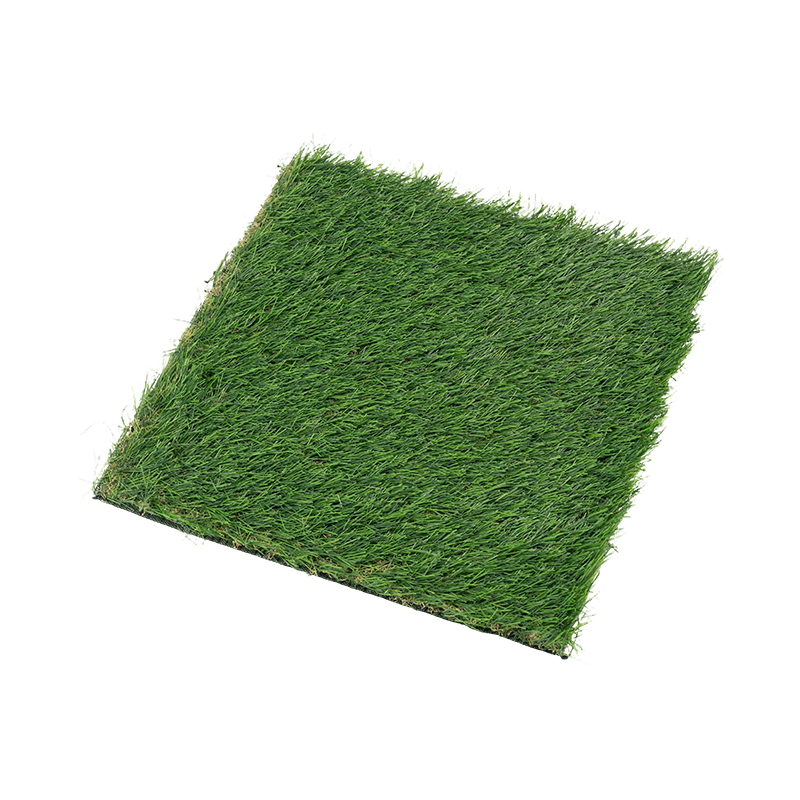 Pet-Specific Artificial Turf with PP+PE Fibers and Drainage BackingPet turf with PP+PE fibers, 30mm pile and drainage backing; worth checking for odor prevention and reliable base performance.View Product →
The Base and Drainage: Where Most Dog Runs Fail
Every soggy, smelly dog run I have inspected turned out to be a base failure rather than a turf failure. The pile is only the top two centimetres of a system that is fifteen centimetres deep.
- Mark out the run and make it long enough for the dog to reach a full stride, not just wide enough to turn around in.
- Excavate 75 to 100 mm and strip all organic topsoil, roots and builder's rubble.
- Lay and compact 75 to 100 mm of clean 6 to 10 mm crushed aggregate in two lifts, watering and vibrating each lift.
- Add a geotextile separation layer if the native soil is clay-heavy, so fines cannot migrate upward.
- Set a fall of one to two percent away from the house and away from the dog's usual resting spot.
- Roll the turf out and let it relax for several hours before trimming, so the pile settles and seams close tightly.
- Fix the perimeter every 30 cm, seam with adhesive tape, then brush in the infill and rinse the whole run.
Edging matters more than most owners expect. A rigid edge set below grass level stops the dog from lifting a corner during a dig and keeps the run's shape for years.
A Cleaning Routine That Actually Removes Odor
Rinsing with water is the whole game, because urine leaves the surface with water rather than with detergent. Cleaning products that mask smell usually add residue that traps the next round of ammonia.
- Scoop solid waste daily; leaving it overnight is what starts the smell cycle.
- Rinse the run weekly in cool weather and twice weekly in summer, using a hose on a wide spray.
- Treat with an enzyme-based pet cleaner monthly, and again after a house guest, a heatwave or an illness.
- Brush the pile upright every month so flattened traffic lanes recover and water spreads evenly.
| Task | Frequency | Time needed | What good looks like |
|---|---|---|---|
| Scoop solid waste | Daily | 1 to 2 minutes | Nothing left on the surface overnight |
| Rinse the run | Weekly, twice weekly in summer | 5 to 10 minutes | Water disappears within seconds |
| Enzyme treatment | Monthly and after heavy use | 15 minutes | No ammonia smell a day later |
| Brush pile upright | Monthly | 10 minutes | Blades stand up, no matted lanes |
| Check seams and edging | Twice a year | 20 minutes | No lifted edges, no gaps at the fence line |
If an odor survives two rinses and one enzyme treatment, the problem is almost always under the backing: either an impermeable base layer or a low spot that never drains.
Heat, Paws and Hot-Weather Safety
Synthetic turf does get hot, and the honest number is this: in full sun on a 32 degrees Celsius day it can run well above 50 degrees Celsius at the surface, which is too hot for a paw for more than a few seconds. That is a design problem with known fixes, not a reason to abandon the surface.
- Give part of the run shade for at least the middle of the day, using a sail, a tree or the north side of the house.
- Test the surface with the back of your hand for five seconds before letting the dog out in the afternoon.
- Move exercise to early morning or after sunset during heatwaves, and keep a shallow water tray in the run.
- Choose lighter-colored yarn and sand infill rather than dark rubber, since both reflect more and store less heat.
Cold is less of an issue than people assume. Turf drains better than grass in freeze-thaw cycles, so a winter run stays firm rather than turning into a mud channel along the fence.
Layouts That Fit Small Yards, Side Passages and Rooftops
The best layout is the one that matches your dog's stride and your yard's drainage, and those two rarely point in the same direction. Measure the stride first, then decide where the run goes.
- Track run along a fence: 10 to 15 metres long and 1 to 1.5 metres wide. Ideal for dogs that need to sprint rather than wander.
- Side passage run: turns wasted space into daily exercise, but needs a base that sheds water away from both walls.
- L-shaped or wraparound run: suits two dogs or a dog that patrols; keep corners wide enough to run through at speed.
- Rooftop or balcony run: workable on a structural slab with drainage trays, wind-rated fixings and a waterproof membrane below.
- Patio corner run: a framed turf panel of two by three metres gives apartment dogs a consistent toilet spot instead of a doorstep habit.
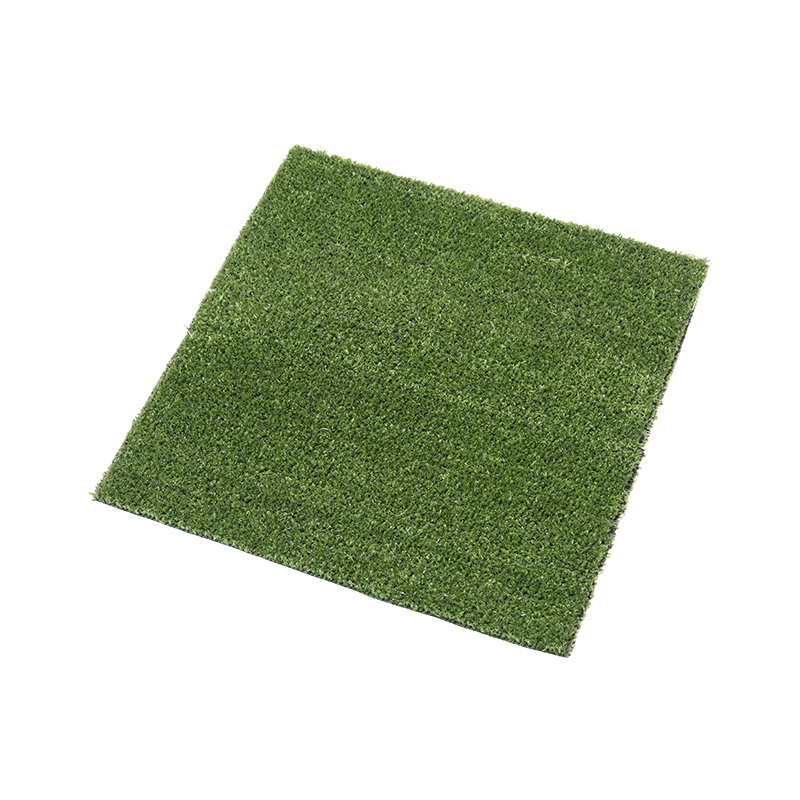 Lightweight Artificial Turf for Rooftop Greening and CoolingLightweight PP rooftop turf with waterproof backing and heat-reducing function, suited to irregular roof layouts that need planned custom cutting.View Product →
Odd shapes are where prefabricated rolls run out of patience. A run that wraps a corner, follows a curved path or fits around a downpipe needs turf cut to a plan, and the same is true of runs built for irregular garden geometry, which is why custom-cut projects have become routine rather than a special order.
Cost, Lifespan and What to Ask Before You Sign
Budget for the base to cost about as much as the turf itself, and treat any quote that hides the excavation as the most expensive one on the list. Installed pet turf generally runs two to three times the upfront cost of a gravel run and a fraction of the annual cost, because you stop buying seed, bedding and replacement chips.
- Which backing does the turf use, and what is its tested drainage rate?
- How deep is the aggregate base, and is it compacted in two lifts?
- How is the perimeter fixed, and what stops a dog from lifting a corner?
- What warranty covers seams, edging and pile flattening, and for how long?
- Which pet-specific product is being quoted, and can you see the roll before it is cut?
A supplier working to recognized quality and environmental management standards, such as ISO 9001 and ISO 14001, will normally hand over the drainage and tuft-bind figures without being pushed. If those numbers are missing, assume the product was specified for a garden.
Frequently Asked Questions
Is artificial turf safe for dogs that dig and chew?
Yes, provided the turf is fixed to a firm base and no offcuts are left within reach. A tuft bind of 2.0 kg or more plus a rigid perimeter edge removes most of the digging incentive, because there is nothing loose to pull.
How do you stop a turf dog run from smelling of urine?
Rinse it with water far more often than you think is necessary. A weekly rinse, a daily pick-up and a monthly enzyme treatment handles a two-dog household; if the smell persists, the fault is a blocked base or a low spot under the backing.
Does artificial turf get too hot for dogs in summer?
It can in full sun, so shade and timing matter. Test with the back of your hand for five seconds, exercise in the early morning or evening during heatwaves, and choose light-colored yarn with sand infill rather than dark rubber.
How much does a turf dog run cost?
Expect roughly two to three times the upfront cost of a gravel run, with the base accounting for about half of it. Over eight to fifteen years the annual cost is usually lower, since there is no re-seeding, topping up or mud repair.
How long does pet turf last?
Eight to fifteen years is a realistic range. Runs on well-compacted aggregate with proper drainage sit at the top of that range; runs on sand, soil or an unperforated backing sit at the bottom.
A dog run is one of the few landscaping projects where the specification really does decide the outcome. Choose short pile with a flow-through backing, spend the money you saved on a properly compacted base, and rinse the surface on a schedule you can actually keep. The reward is a run that looks the same in February as it does in July, and a dog that uses it without being carried back inside.
If your space is awkward, wrap-around or rooftop, the run is still buildable, and a supplier that handles bespoke sizes, shapes and drainage plans is usually the difference between a surface that works and one that merely looks right on the day it is installed.

 +86-19742095266
 zoe_canyoograss@163.com
 No.18 Baqiao, Xinji Yizheng, Yangzhou, Jiangsu. P.R. China
