 Get in touch
 English
  English
 中文简体
中文简体 русский
 Español
 عربى
عربى Français
 Português
 Deutsch
 বাংলা
বাংলা 日本語
日本語 Polskie
 italiano
 Türk
Türk 한국어
한국어 ไทย
ไทย
Short answer: weeds almost never grow through the synthetic fibres themselves. They arrive from the edges, the seams or the base underneath, and they will keep returning until one of those three is fixed.
Artificial turf is a synthetic pile tufted into a backing and held upright by an infill of silica sand, rubber granulate, or both. It is not a living surface, so it cannot produce weeds from its own material. Anything green that appears in it arrived as a wind-blown or bird-carried seed, as a rhizome creeping in from a border, or as moss and algae forming in a damp, shaded spot.
If dandelions are lining up along a lawn installed two summers ago, the turf is not failing. The installation is showing you where its weak points are.
Content
Why Weeds Appear in Artificial Turf
Weeds take hold for one of five reasons, and four of them are decided before the first roll is unrolled.
- Open infill. Sand and rubber trap dust, pollen and seeds, and that layer stays damp long enough for a seedling to anchor.
- An unfinished base. If compacted aggregate stops short of a corner, or the membrane is missing, the soil below is still a seedbed.
- Soil at the edges. Where turf meets a flower bed, tree pit or verge with no barrier, couch grass and bindweed simply travel sideways.
- Roots pushing up. Tree roots lift a panel, leaving a gap that lets light and water into the base.
- Seams and service cuts. A poorly glued joint, a drain outlet or a utility trench is a permanent doorway.
A sixth case gets mislabelled as weeds: moss and algae need moisture and shade rather than soil, so they point to drainage and airflow problems, not to seed contamination.
Weeds, Moss or Algae? Match the Symptom to the Cause
Identify what is actually coming up before spending money on a treatment, because a lawn herbicide does nothing for moss and a new membrane will not help if plants are walking in from an unguarded edge.
| What you see | Most likely cause | Typical position | First fix |
|---|---|---|---|
| Broadleaf rosettes (dandelion, plantain) | Wind-blown seed germinating in damp infill | Open, low-traffic areas | Hand pull, then top up infill |
| Blades appearing in a line | Rhizome creeping in from adjacent soil | Within 300 mm of beds and verges | Solid edging plus a membrane flap |
| Soft green mat | Moss from shade, compaction and slow drainage | North-facing areas, under trees | Improve drainage, brush and ventilate |
| Dark green or black slick | Algae on a wet, low-permeability base | Dips, near downpipes and drains | Re-level and check infiltration |
| Woody shoots or suckers | Tree and shrub roots beneath the base | Close to mature trees | Root barrier, lift the affected panel |
How to Remove Weeds From Artificial Turf
Pull first, treat second, repair third: hand removal clears annual seedlings in minutes, while anything creeping in from a border or pushing through the base needs more than a pair of gloves.
- Work on dry turf. Pull straight up from the base of the stem rather than twisting, so the root comes out with the shoot and the fibres stay upright.
- Spot-treat the stubborn ones. Boiling water or diluted acetic acid kills small seedlings without residue, but keep both away from glued seams where heat and acid soften adhesive.
- Use herbicide only where the label allows it. Many selective lawn weed killers are safe on synthetic fibres, yet solvent- and dye-heavy products can stain pale turf and can void an installation warranty.
- Brush and re-level afterwards. A stiff brush clears dead material and lifts flattened pile, then top up sand or rubber infill to the recommended height so the base is covered again.
- Escalate only when regrowth repeats in the same spot. Cut a clean flap, inspect the membrane and base, and repair the gap instead of pulling the same plant every month.
What to avoid
- Do not run a line trimmer along the edge; it frays the pile.
- Do not dig through the backing with a trowel; a cut opens a channel for seeds and loses infill.
- Do not spray total herbicide on nearby beds on a windy day.
Prevention Starts Under the Turf, Not on It
The most effective weed-control measure in artificial turf is a continuous woven geotextile membrane under the base, backed up by a solid edge restraint; everything else is routine maintenance.
- Sub-base. 75-100 mm of compacted crushed stone laid to a consistent fall, so water leaves the surface instead of pooling. Hollows are where moss appears first.
- Weed membrane. A woven geotextile of roughly 100-150 g/m², laid with 100 mm overlaps and turned up at the edges. The joins fail long before the fabric does.
- Edge restraint. Concrete kerb, timber or aluminium separates turf from soil and blocks lateral creep; a 100-150 mm gravel strip adds a second line of defence.
- Seams and cuts. Glue and tape every joint tightly, because a 5 mm gap is enough for a seed to reach the base.
- Infill and drainage. Keep sand topped up to the recommended depth, and keep the base free-draining so shaded corners stay dry.
Where Weeds Cause the Most Trouble
Risk is highest wherever turf meets soil, shade, or a structure that is difficult to lift, which is why residential lawns, rooftops and playgrounds account for most of the callbacks.
Gardens and residential lawns
Borders, pet runs and tree pits are the usual entry points. A domestic lawn is rarely one clean rectangle, so many edges touch soil, and each one needs a membrane flap and a solid edge.
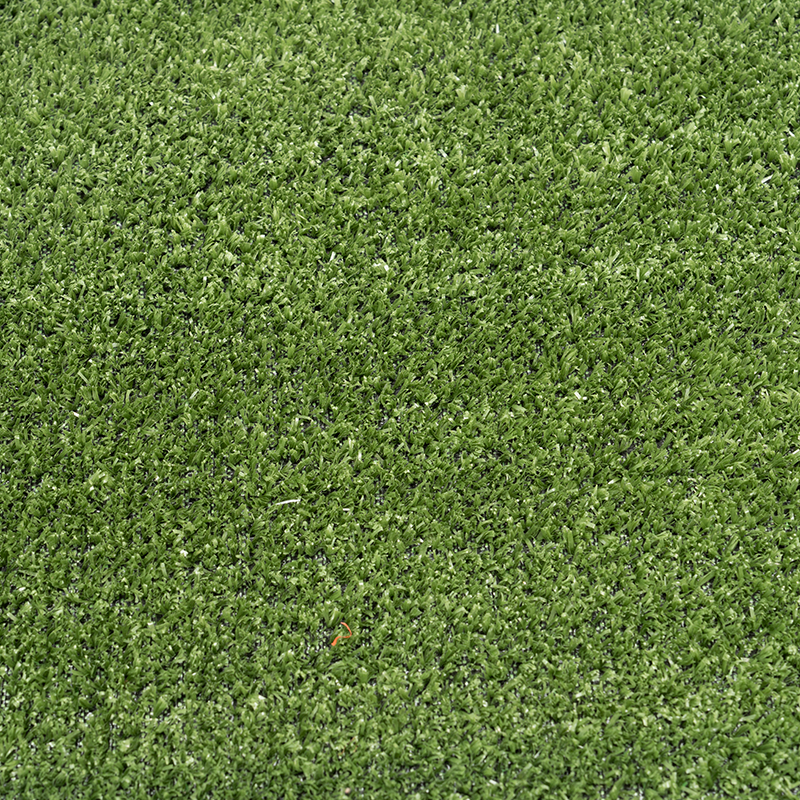 Residential Artificial Turf for Lawns, Pet Areas, and Play SpacesHigh-density PP/PE turf with composite backing, designed for domestic lawns, courtyards, pet runs, and children's play areas with easy maintenance.View Product →
Rooftops and terraces
On a roof, seed arrives on the wind and settles around drains, upstands and parapet joints. Weight matters as much as weeds, so the base has to be light, the membrane continuous and the drainage path clear.
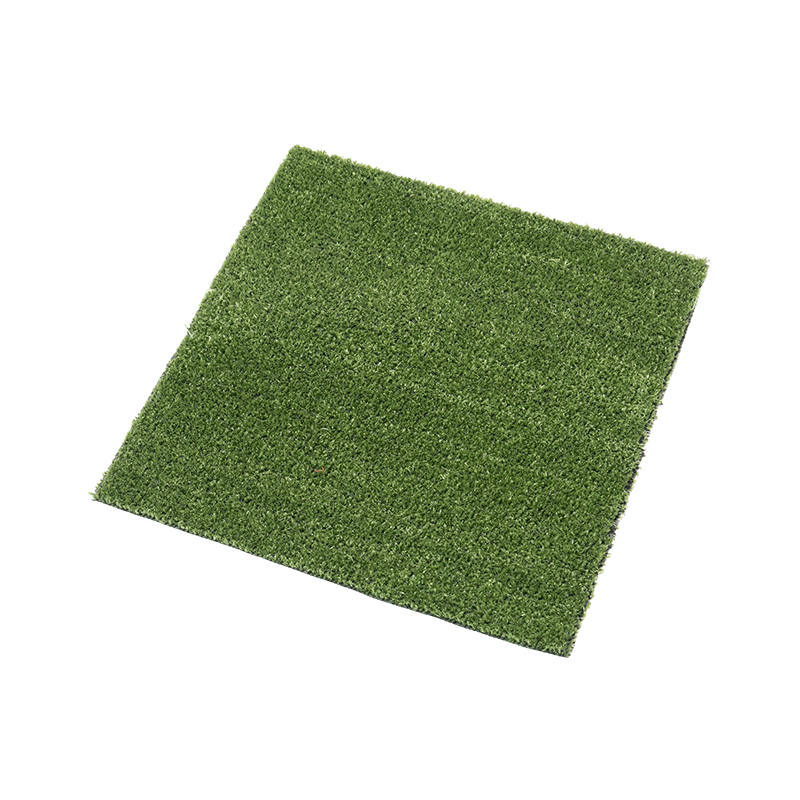 Artificial Turf for Rooftop Terraces and Green RoofsLightweight rooftop synthetic turf with waterproof backing, cushioning, and UV resistance for terraces, play areas, and cafes.View Product →
Playgrounds and school yards
Children carry seed in on their shoes, and shaded corners stay damp. These surfaces are also brushed less often than they should be, so seedlings reach a visible size before anyone pulls them.
What to Check Before You Buy Turf and Underlay
Buy the system, not the roll: the membrane, the edge detail and the base specification decide whether you will be pulling weeds in three years.
- Backing type. Perforated backings drain faster but let fine roots probe upwards; non-perforated backings need a well-drained base beneath them.
- Pile and density. A denser, tighter tuft hides the surface better in busy areas and makes it harder for seedlings to reach the backing.
- Membrane in the quote. If the line item is missing, ask for it in writing, including overlap detail and edge treatment.
- Irregular shapes. Curved beds and roof upstands create extra seams, and every seam is a potential gap. Unusual layouts deserve a cut plan in advance, which is how we deliver custom turf projects rather than on-site guesswork.
- Warranty wording. Read what it says about chemical treatments and about weeds at edges; that single sentence tells you how the installer expects to be judged.
Frequently Asked Questions
Can weeds really grow through artificial grass?
Yes, but not through the fibres. Seeds germinate in the infill or in a gap, and perennials creep in from the edges or push up from soil left below the base. The turf is the last place the plant appears, and the last place to look for the cause.
Does weed killer damage artificial turf?
Most selective and contact herbicides do not attack polyethylene or polypropylene fibres. The real risks are solvent-based products that stain pale surfaces, over-application that leaves residue in the infill, and any treatment that voids the warranty. Spot-treat, keep the dose low and read the paperwork first.
How long does a weed membrane last?
A quality woven geotextile buried under compacted aggregate performs for 15-25 years because it is shielded from ultraviolet light. Most failures come from overlaps that were never sealed or from cuts made for drains.
Is it worth lifting the turf to fix a recurring problem?
Only when the same plant returns in the same square metre after repeated pulling. Then cut a neat flap, repair the base or membrane, and glue the flap back; it is a targeted repair, not a reinstall.
Artificial turf and weeds are a base-and-edge story, and the surface only shows the symptom. Deal with the membrane, the restraint and the seams, and the yearly routine shrinks to a walk-around with a brush and a few minutes of hand pulling. Installed projects across schools, rooftops and public landscapes keep pointing to the same lesson: the lawns that stay clean are the ones where the detail under the turf was taken seriously.

 +86-19742095266
  zoe_canyoograss@163.com
  No.18 Baqiao, Xinji Yizheng, Yangzhou, Jiangsu. P.R. China