 Get in touch
 English
 English
 中文简体
 русский
 Español
 عربى
 Français
 Português
 Deutsch
 বাংলা
 日本語
 Polskie
 italiano
 Türk
 한국어
 ไทย

Artificial turf with drainage is designed so water passes straight down through the carpet instead of sitting on top of it. On a correctly built system — perforated backing, an open-graded stone base and a graded fall — the surface sheds heavy rain faster than most natural grass lawns, and it does it without turning into mud. The important caveat: the carpet is rarely the deciding factor. If the base is compacted clay, or the turf was glued to a solid slab with no fall, water has nowhere to go, and no amount of perforations will save the installation.
A drainage-capable system normally contains all five of these elements:
- Perforated, needle-punched or woven backing, or a backing punched with drainage holes.
- An open-graded crushed stone base that temporarily stores water and releases it slowly.
- A geotextile separator that stops fine soil particles migrating up and clogging the stone.
- A fall of roughly 1–2% across a garden lawn, or a shallow camber on a sports pitch.
- Edge details — kerbs, perimeter drains, soakaways or permeable subsoil — that give water an exit.
Content
- 1 How the drainage path actually works
- 2 Drainage rates: what to expect and what to ask for
- 3 Base design and slope: where most projects fail
- 4 Matching the drainage spec to the application
- 5 Common myths and the real causes of puddling
- 6 Maintenance that keeps water moving
- 7 Frequently asked questions
- 8 Bottom line
How the drainage path actually works
In a well-built system, water travels down, not sideways, and each layer has a specific job.
- Blades and infill. Water enters between the filaments. Infill choice matters: silica sand and rounded kiln-dried sand pass water quickly, while a thick layer of fine crumb rubber can slow the top few millimetres.
- Backing. Perforated, woven and needle-punched backings are permeable by design. A solid, non-perforated secondary backing is not — it turns the carpet into a tarpaulin. Ask for the tested water permeability figure on the product data sheet rather than relying on marketing language.
- Base. Single-size crushed stone with no fines holds water in its voids and releases it into the subsoil or a drainage line. A sand-and-gravel "carpet base" over compacted soil has a fraction of that capacity.
- Fall and outlets. Water only leaves the site if the surface is graded towards a drain, a soakaway or free-draining subsoil. On clay, that means an engineered outlet is not optional.
Drainage rates: what to expect and what to ask for
Suppliers quote permeability in litres per minute per square metre (L/min/m²) or millimetres per hour, but that figure describes the carpet alone under lab conditions. The real site performance is set by the weakest layer in the build-up.
| System | Typical drainage behaviour | Best suited to |
|---|---|---|
| Perforated turf over open-graded stone with lateral drains | High capacity; clears intense rainfall bursts without standing water | Football pitches, training fields, multi-use courts |
| Perforated turf over a shallow gravel or drainage-mat base | Moderate capacity; copes with normal rain, struggles in extreme events | Rooftops, terraces, balconies, small gardens |
| Standard turf over compacted soil | Low; relies almost entirely on surface runoff and slope | Dry climates, decorative areas, low rainfall regions |
| Natural grass on heavy clay | Variable and often poor; saturates and poaches under traffic | Low-traffic lawns in favourable soil |
A practical benchmark for a residential lawn is coping with short bursts of 30–40 mm per hour, which is a typical heavy storm in a temperate climate. Sports surfaces are usually specified well above that, because a pitch that holds water is a cancelled fixture.
Base design and slope: where most projects fail
When an installed lawn or pitch puddles, the base is the cause in almost every case we inspect, not the carpet.
- Excavate and prepare. Remove the topsoil, then compact and test the subgrade. On clay, add a drainage layer or connect to an outlet.
- Lay the geotextile. Overlap joints generously so fines cannot wash into the stone.
- Place open-graded stone. Single-size crushed aggregate, typically 6–20 mm depending on the design, laid in compacted layers with no fines added.
- Build the fall. Aim for around 1–2% on landscape turf and a shallow camber of roughly 0.5–1% on sports surfaces, always falling away from buildings.
- Water-test before laying. Hose the finished base and watch where water collects. It is far cheaper to correct a low spot at this stage than to lift a glued carpet.
| Check point | What to verify | Why it matters |
|---|---|---|
| Sub-base | Firm, stable, no ponding after watering | Settlement creates hollows that hold water permanently |
| Stone grading | Single size, clean, free of fines and dust | Fines fill the voids and cut capacity dramatically |
| Geotextile | Continuous, overlapped, undamaged | Prevents long-term clogging from below |
| Fall | Consistent gradient with no backfall | Backfall traps water even on permeable carpet |
| Outlets | Drains, soakaways or permeable subsoil connected | Storage without an exit is just a reservoir |
Matching the drainage spec to the application
Choose the system by traffic load and by what sits underneath it, not by the price per square metre. Our landscape artificial turf range is built on the same perforated-backing principle as the sports lines, but the base design changes completely between a roof deck and a school field.
Sports pitches and multi-use courts
On a pitch, drainage is a safety requirement as much as a comfort one, because standing water changes ball roll, alters grip and raises injury risk. A football pitch build usually pairs perforated backing with a shockpad and an engineered stone profile connected to lateral drains.
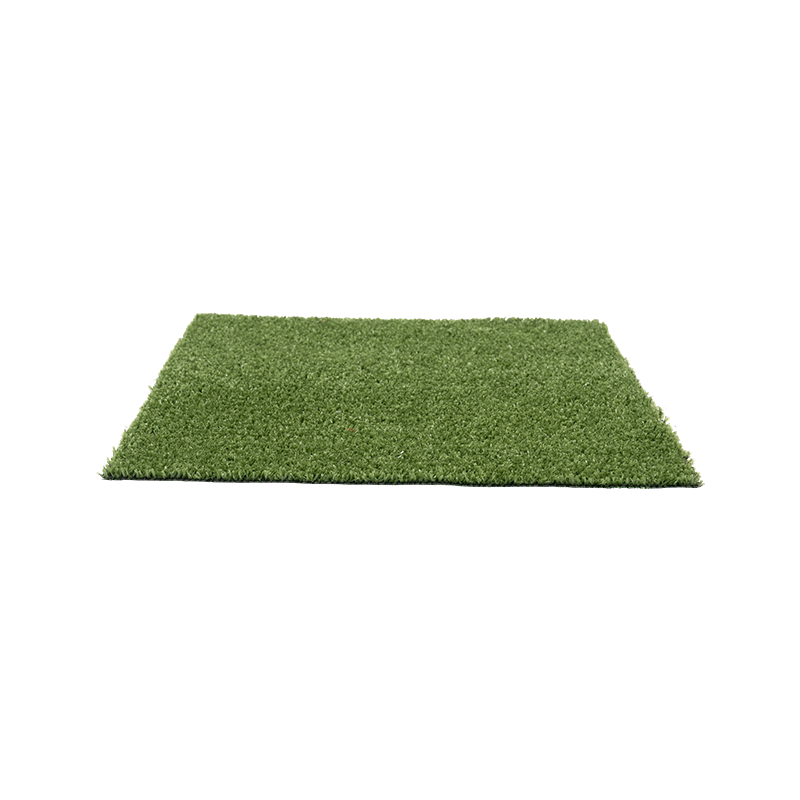
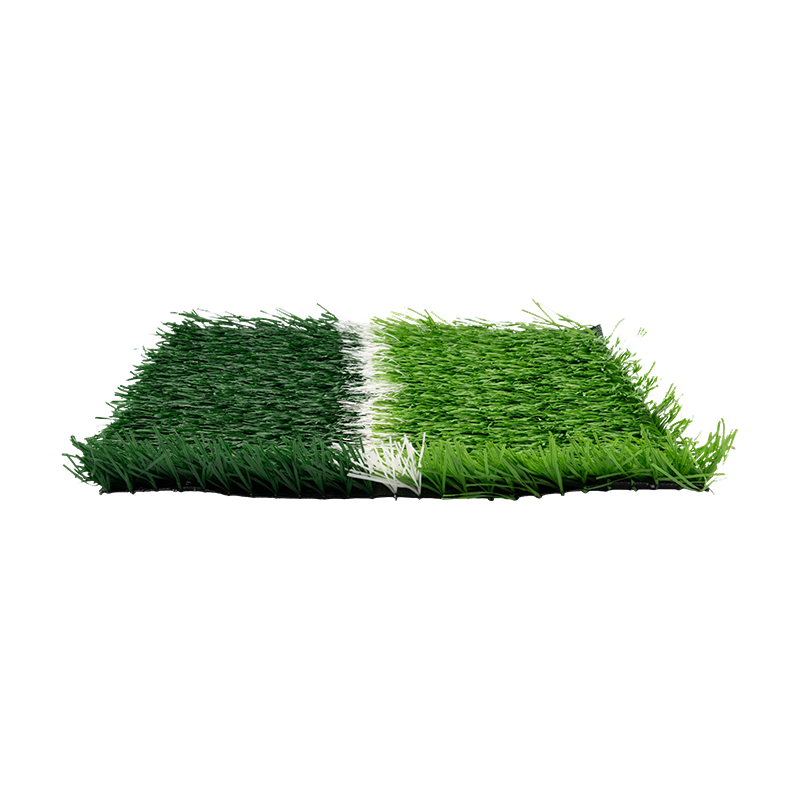 Artificial Turf for Football PitchesUnfilled mesh turf with perforated backing suits sloped football pitches where reliable drainage and consistent ball roll matter.View Product →
Rooftops, podium decks and terraces
Rooftop installations add two constraints: weight and outlet capacity. A lightweight perforated carpet over a drainage mat, with outlets sized for the roof area, keeps the deck dry without loading the structure with deep stone.
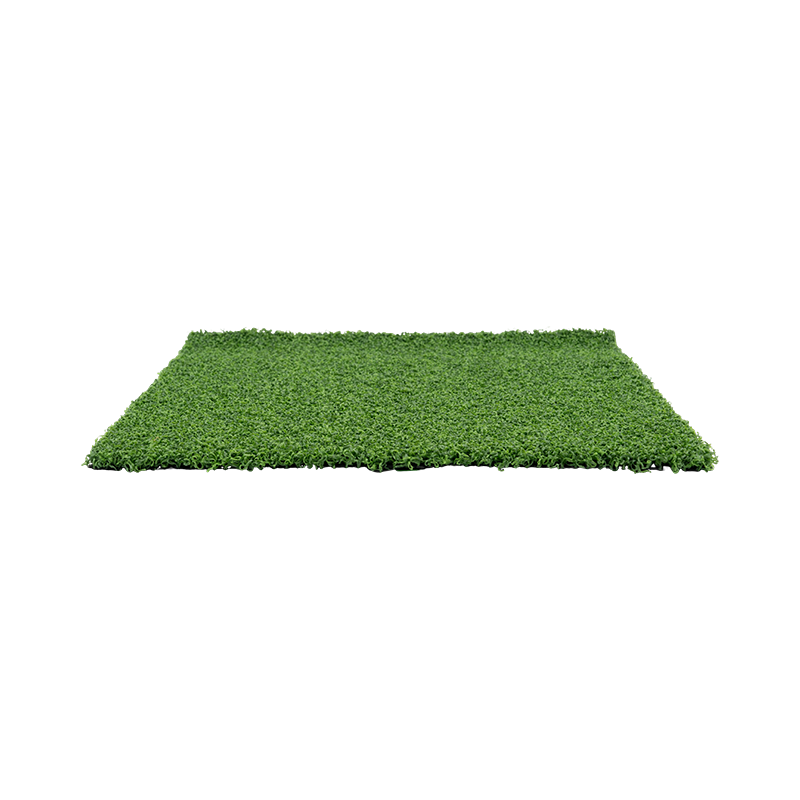
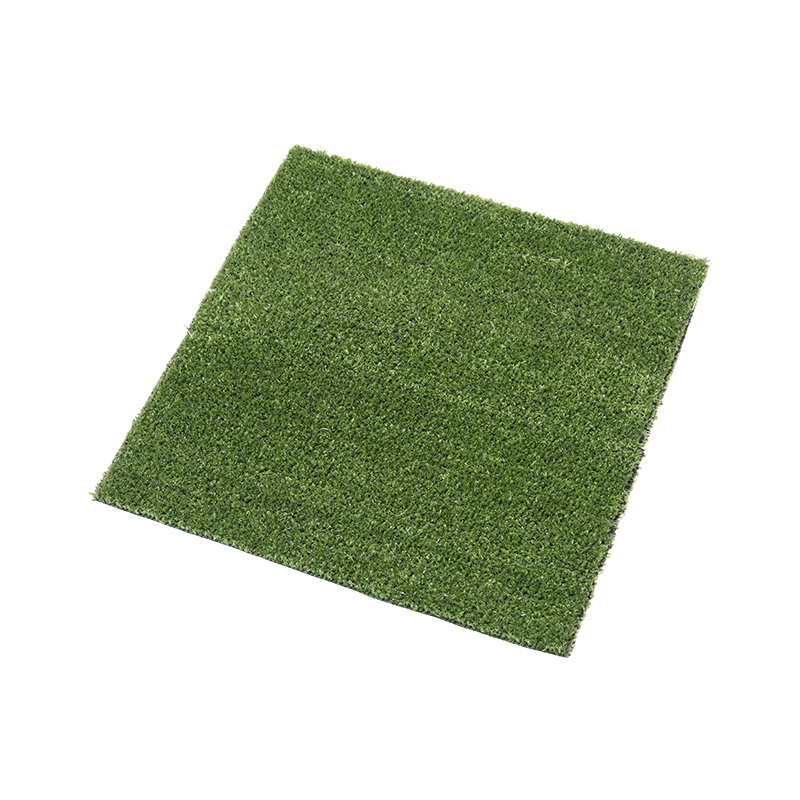 Artificial Turf for Rooftop TerracesLightweight synthetic grass for roof decks, using permeable backing and mesh base to support drainage without deep stone.View Product →
Pet areas and backyards
Pet turf needs permeability for wash-down water and urine, plus an odour control plan. Perforated backing, an open base and a slight fall do most of the work; heavy crumb infill that traps moisture does the opposite.
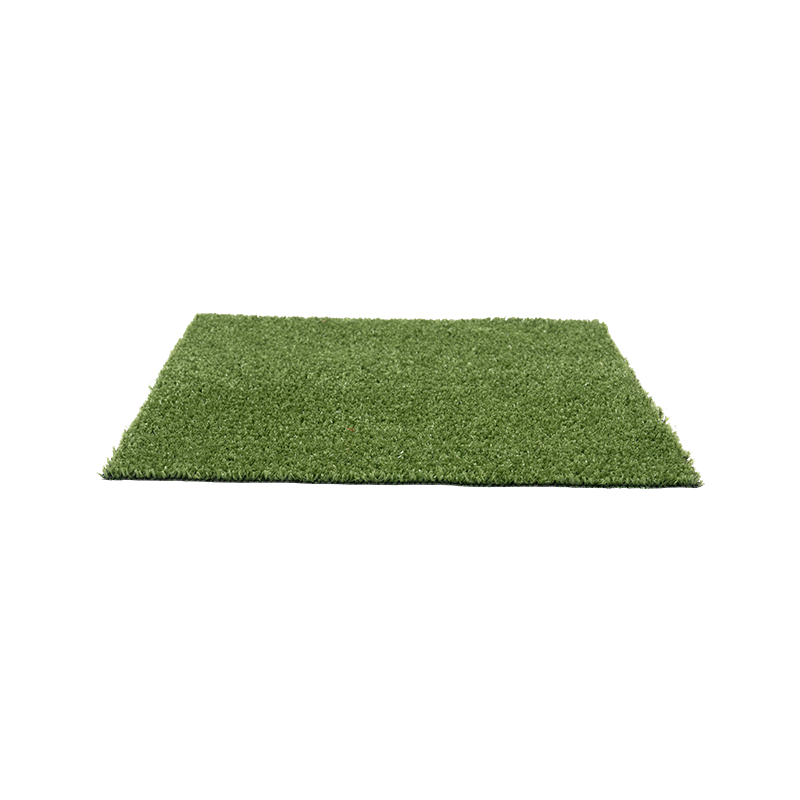
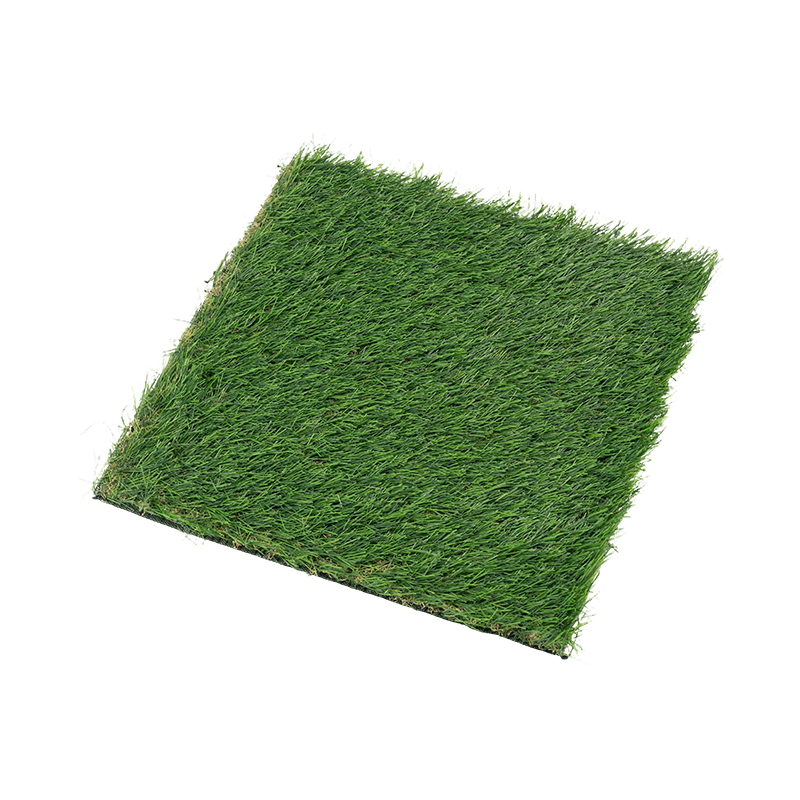 Artificial Turf for Pets and Pet AreasPet-specific PP/PE turf with mesh backing and single-needle structure for drainage, odor control, and scratch-resistant comfort.View Product →
Common myths and the real causes of puddling
Nearly every complaint about artificial turf flooding traces back to construction, not to the material itself.
- "Turf creates puddles." Turf only puddles when the base is sealed, the fall is wrong or the backing is solid.
- "It makes flooding worse." A stone base acts as a shallow reservoir and discharges slowly, which can reduce peak runoff compared with paving — provided the design includes an outlet.
- "Pet waste sits on the surface." On a permeable build with wash-down, it does not; on solid backing, moisture and odour accumulate.
- "All backings are the same." Perforation density and backing construction vary widely, and so does measured permeability.
- "Infill never affects drainage." Fine dust and degraded crumb gradually reduce throughput, which is why top-up and brushing belong in the maintenance schedule.
Maintenance that keeps water moving
Drainage capacity declines slowly through infill migration and surface compaction, so upkeep should be planned from day one.
- Brush against the pile direction monthly to lift flattened fibres and redistribute infill.
- Top up sand or infill to the specified level; thin patches expose the backing to UV and dirt.
- Clear leaves and debris from drains and outlets before the wet season.
- Run an annual water test on a small area and note how quickly it clears.
- Avoid blasting fines from surrounding soil onto the carpet with a pressure washer.
Frequently asked questions
Does artificial turf with drainage drain faster than natural grass?
Usually yes, on a properly built base. A permeable carpet over open-graded stone can pass water at rates well above a clay-based lawn, and it does not compact into mud under foot traffic.
What drainage rate should I ask for?
Ask for the tested permeability of the specific carpet and, more importantly, for the base design and outlet capacity for your site. A high carpet figure means little if the stone beneath is full of fines.
Does a shockpad block water?
Not if it is a perforated or drainage-channel pad specified for permeable systems. Solid, closed-cell pads can restrict flow, so confirm compatibility with the carpet and the base.
Can I add drainage under existing turf?
Sometimes. If the carpet is still in good condition it can be lifted, the base re-graded and the turf re-laid, but this only works when the backing itself is permeable.
How much slope does artificial turf need?
Around 1–2% for landscape areas and roughly 0.5–1% camber for sports surfaces, always directed away from buildings and towards an outlet.
Bottom line
Artificial turf with drainage works, but it works as a system: permeable backing, clean open-graded stone, a sensible fall and a real outlet. Get those four right and the surface stays usable through storms that would close a natural pitch. Get them wrong and you will be lifting carpet within a season. If your site has unusual constraints — a podium deck, heavy clay, or a bespoke shape — our custom turf projects team can size the build-up around them rather than forcing a standard kit onto the site.

 +86-19742095266
 zoe_canyoograss@163.com
 No.18 Baqiao, Xinji Yizheng, Yangzhou, Jiangsu. P.R. China
